How to Grill New York Strip Steak (Juicy, Charred & Perfectly Medium-Rare)
The New York strip is the steakhouse workhorse: a bold beefy flavor, a firm bite, and a fat cap that bastes the meat as it cooks. It costs less than a ribeye, eats more richly than a filet, and — grilled right — it is the easiest premium steak to nail at home. The secret is the same as with every great steak: a screaming-hot sear, a thermometer instead of a timer, and a proper rest.
Key Takeaways
- Buy a strip at least 1 inch thick (1¼–1½ inches is ideal) with a creamy-white fat cap and good marbling.
- Grill over direct high heat (450–500°F): about 4–5 minutes per side for a 1-inch strip, 5–6 minutes per side for 1½ inches.
- Pull at 130°F for medium-rare, 135°F for medium, 145°F for medium-well — then rest 5 minutes.
- Salt at least 40 minutes before grilling (or right before); never salt 5–15 minutes ahead, when the surface is wettest.
- The fat cap is flavor: score it lightly and let it render over the fire instead of trimming it all off.
Choosing the Right Strip Steak
Not all strips are equal, and the choice at the counter decides half the result. Look for a steak 1 to 1½ inches thick — anything thinner overcooks before it can develop a crust. The meat should be bright cherry-red with fine white streaks of fat running through it; that marbling is what keeps the strip juicy, since the cut is leaner than a ribeye.
The fat cap along one edge is the strip’s signature. Choose a steak with a cap about ¼ inch thick, creamy white rather than yellow. Do not trim it all off — as it renders over the heat it bastes the meat and crisps into one of the best bites on the plate.
Grade matters but is not everything. USDA Prime has the most marbling and the highest price; Choice is the sweet spot for most grillers — well-marbled and widely available. A thick Choice strip, cooked properly, will beat a thin Prime strip every time.
How to Prep a Strip Steak for the Grill
Take the steak out of the fridge 30–45 minutes before cooking so the chill comes off — a cold center is the main reason steaks cook unevenly. Pat it completely dry with paper towels; a wet surface steams instead of searing, and no crust forms.
Season simply: coarse kosher salt and freshly cracked black pepper on all sides, including the fat cap. If you salted an hour or more ahead, the salt has dissolved and been reabsorbed — perfect. If you forgot, salt right before the steak hits the grill; that is far better than salting 10 minutes ahead, when the salt has drawn moisture to the surface and the steak is at its wettest.
Lightly oil the steak, not the grate — a thin coat of high-smoke-point oil (avocado or refined olive oil) helps the seasoning stick and prevents sticking. Brush the hot grate clean with a grill brush first; a dirty grate is the number-one cause of torn crusts.
Grilling Times & Temperatures for New York Strip
Times assume a preheated grill at 450–500°F and a steak rested at room temperature for 30 minutes. Always confirm with an instant-read thermometer — thickness, starting temperature, and grill heat vary, and the thermometer is the only thing that does not guess.
| Strip Thickness | Heat | Time per Side | Pull Temperature | Final (After Rest) |
|---|---|---|---|---|
| ¾ inch | Direct high | 3–4 min | 125°F | ~130°F rare |
| 1 inch | Direct high | 4–5 min | 130°F | ~135°F medium-rare |
| 1 inch | Direct high | 5–6 min | 135°F | ~140°F medium |
| 1¼ inches | Direct high | 5–6 min | 130°F | ~135°F medium-rare |
| 1½ inches | Sear + indirect | 2 min sear, then 5–7 min indirect | 130°F | ~135°F medium-rare |
| 1½ inches | Direct high | 6–7 min | 145°F | ~150°F medium-well |
USDA guidance is 145°F with a 3-minute rest for beef steaks, which lands at medium. Most steak lovers pull a strip at 130°F for medium-rare — the temperature climbs about 5°F during the rest.
Step-by-Step: Grilling a New York Strip
Step 1: Build a Two-Zone Fire
Set up one hot side and one cooler side. On a gas grill, light the burners on one side to high and leave the other side off or on low. On charcoal, bank the coals on one side. Preheat with the lid closed for 10–15 minutes until the hot side reads 450–500°F.
Step 2: Sear Over Direct Heat
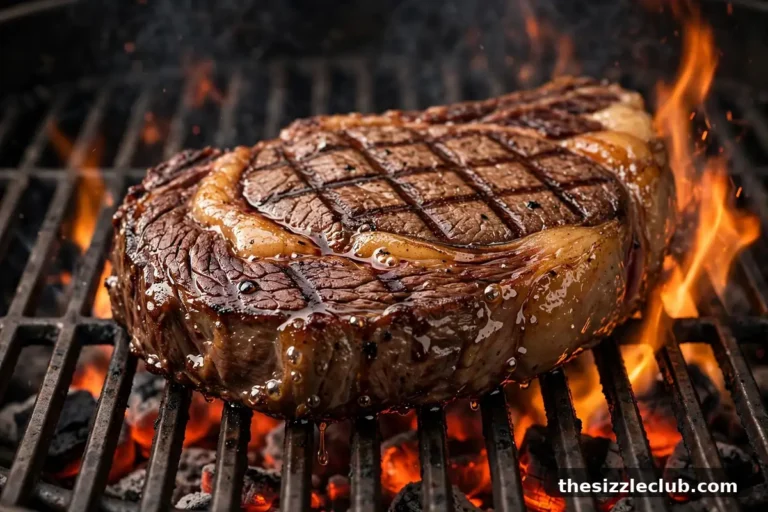
Lay the strip on the hottest part of the grate, fat cap facing the fire’s edge so it renders without flaring. Do not move it. Let it sit for 4–5 minutes (for a 1-inch steak) until a deep brown crust forms. If a flare-up starts, slide the steak to the cooler side for a few seconds — never let it sit in open flames.
Step 3: Flip Once and Finish
Flip with tongs, never a fork — piercing the meat lets juices escape. Sear the second side for the same time. For a 1-inch strip at medium-rare, that is usually all it takes: 4–5 minutes per side, then check the temperature.
Step 4: Use the Indirect Side for Thick Steaks
For a 1½-inch strip, sear 2 minutes per side over direct heat, then move it to the indirect side, close the lid, and let it finish gently for 5–7 minutes until the center reads 130°F. This reverse-sear style finish cooks the steak evenly edge to edge, with no grey band under the crust.
Step 5: Rest Before Slicing
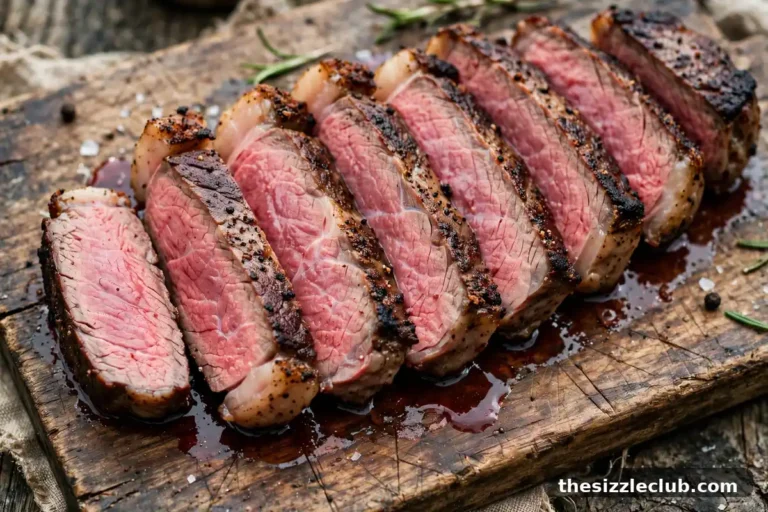
Move the steak to a cutting board and rest it for 5 minutes — 10 for a very thick cut. The internal temperature climbs about 5°F and the juices redistribute. Slice against the grain in ½-inch strips, starting from the fat-cap side, so every piece is tender.
The Reverse Sear for Thick-Cut Strips: A Worked Example
If your strip is 1½ inches thick and weighs about 14 ounces, try the reverse sear — it is the most forgiving way to cook a thick steak. Start it on the indirect side at roughly 300°F, lid closed. After about 20–25 minutes, the center will read around 115°F. Move it to the direct side at 500°F+ and sear 60–90 seconds per side until the crust is dark and the center hits 130°F. Rest 5 minutes; carryover takes it to about 135°F.
The result is a strip that is pink from edge to edge, with only a thin browned crust — no wide grey ring like you get from searing a thick steak entirely over high heat. It adds about 10 minutes to the cook and is worth every one of them.
Common Mistakes That Ruin a Strip Steak
The most common mistake is grilling a thin steak. A ½-inch strip is nearly impossible to cook well — by the time the outside browns, the inside is overdone. Spend the extra dollar on thickness; it is the cheapest upgrade in grilling.
The second is cutting into the steak to “check if it’s done.” Every cut spills juice, and you cannot un-cut a steak. An instant-read thermometer costs less than one ruined strip and answers the question in two seconds.
The third is skipping the rest. A strip cut straight off the grill bleeds its juices onto the board. Five minutes of patience keeps them in the meat where they belong.
Finally, do not trim the fat cap off completely. That strip of fat is the reason the New York strip tastes like a steakhouse steak. Score it in a few places so it does not curl, let it crisp over the fire, and eat it with the meat.
Frequently Asked Questions
How long do you grill a New York strip steak?
A 1-inch strip needs about 4–5 minutes per side over direct high heat (450–500°F) for medium-rare. A 1½-inch strip needs a 2-minute sear per side plus 5–7 minutes on the indirect side. Always verify with a thermometer — pull at 130°F for medium-rare.
What temperature should a New York strip be cooked to?
Pull at 130°F for medium-rare, 135°F for medium, and 145°F for medium-well. Rest 5 minutes; the temperature rises about 5°F during the rest. The USDA safe minimum for beef steak is 145°F with a 3-minute rest.
Is New York strip better than ribeye?
It depends on what you value. The ribeye is richer and more marbled; the strip is firmer, beefier, and leaner, with a satisfying chew and a lower price. Grillers who like a bold, meaty bite usually prefer the strip; those who want maximum richness pick the ribeye.
Should you marinate a New York strip?
No — a good strip needs only salt and pepper. Marinades add surface moisture that fights the sear, and the cut already has plenty of flavor. Save marinades for tougher, leaner cuts. If you want extra flavor, finish with compound butter or a garlic-herb baste instead.
How do you keep a strip steak from curling on the grill?
Score the fat cap: make shallow cuts through the fat (not the meat) every inch or so along the cap. The fat contracts as it renders, and the scores let it relax instead of pulling the steak into a curve. A heavy press for the first 30 seconds also helps.
Bottom Line
The New York strip rewards simple cooking: a thick, well-marbled steak, a hot two-zone fire, a 130°F pull, and a five-minute rest. Buy thick, season simply, sear hard, and trust the thermometer — do that and the strip will taste like it came off a steakhouse grill, at a third of the price.