How to Grill Chicken Thighs (Crispy Skin, Juicy Inside): Times, Temperatures & Marinades
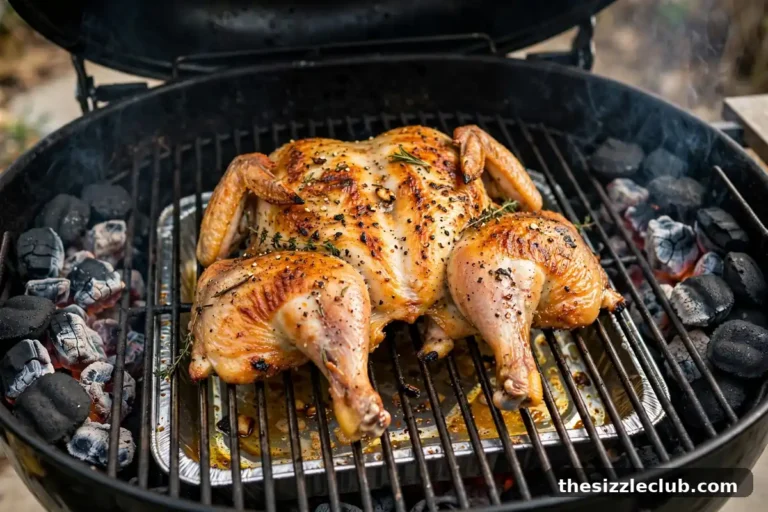
Grilled chicken thighs are the most forgiving cut on the grill — and the tastiest. Done right, you get shatteringly crisp skin, meat that stays juicy even if you overshoot by a few degrees, and dinner on the table in about 30 minutes. Done wrong, you get rubbery skin, flare-up char, and dry meat.
The short answer: grill bone-in, skin-on thighs skin-side down over medium-high direct heat (about 425°F / 220°C) for 6 to 7 minutes until the skin is golden and crisp, then move them to the indirect side, close the lid, and cook until the thickest part reads 175–185°F (79–85°C) — roughly 18 to 22 more minutes. Rest 5 minutes before serving. Boneless, skinless thighs need just 5 to 7 minutes per side over medium-high heat and are done at 165°F (74°C), though they taste better pulled at 175°F.

Key Takeaways
- Chicken thighs are done and safe at 165°F (74°C), but bone-in thighs taste best at 175–185°F, when the connective tissue has fully softened.
- Dry skin is the whole secret to crispy skin: pat thighs dry, salt them, and let them sit uncovered in the fridge for a few hours if you can.
- Use a two-zone fire: sear skin-side down over direct heat, finish over indirect heat so the skin crisps without burning.
- Never press thighs flat with a spatula — it squeezes out juice and pushes fat into the fire, which causes flare-ups.
- Always rest grilled chicken for 5 minutes; cutting straight in costs you the juices you just worked to keep.
Why Chicken Thighs Are the Most Forgiving Cut on the Grill
Chicken breast punishes you for a 10-degree mistake. Thighs forgive a 20-degree one. The reason is dark meat: thighs carry more fat and connective tissue than breast, and that fat bastes the meat from the inside as it cooks. Where a breast dries out past 165°F, a thigh is still juicy at 180°F — in fact, it is better there, because the collagen in the meat has had time to melt into gelatin.
That forgiveness is exactly why thighs are the best cut for learning to grill chicken. A flare-up, a hot spot, a lid left open too long — thighs absorb all of it and still land on the plate tasting great. They are also cheaper than breast in most shops, which makes them the smart everyday grilling cut, not just the backup option.
Bone-In vs. Boneless, Skin-On vs. Skinless: What to Buy
Bone-in, skin-on thighs are the best choice for the grill. The bone slows cooking slightly and protects the meat nearest it from drying out, while the skin renders, crisps, and shields the meat from direct flame. If crispy skin matters to you at all — and it should — this is the cut to buy.
Boneless, skinless thighs are the weeknight shortcut. They cook in half the time, take marinade beautifully, and are easier to slice for tacos, salads, and rice bowls. The trade-off is no crispy skin and a smaller margin for error, though they are still far more forgiving than breast.
What to look for at the shop: skin that is pale and dry-looking rather than slimy, meat that is pinkish-red (not grey), and thighs of roughly equal size so they finish together. A pack where one thigh weighs twice another will cook unevenly no matter how careful you are.
The Only Marinade Formula You Need
You do not need a recipe collection. You need one formula and three flavour directions. The base formula, per pound (450 g) of thighs: 2 tablespoons oil, 1 tablespoon acid (lemon juice or vinegar), 1 teaspoon kosher salt, 2 cloves garlic (minced), and 1 teaspoon of your chosen spice blend. Whisk, coat the thighs, and marinate 30 minutes to 4 hours in the fridge. Longer than 8 hours and the acid starts to make the surface mushy — thighs do not need an overnight soak.
Three proven directions using that base:
- Lemon-herb: olive oil, lemon juice, garlic, oregano, black pepper, and lemon zest. Bright, classic, and brilliant with grilled vegetables.
- Smoky chipotle: neutral oil, lime juice, chipotle in adobo, cumin, and a pinch of brown sugar. Watch the sugar — it burns over direct heat, so keep these thighs mostly indirect after a quick sear.
- Soy-ginger: soy sauce in place of the salt, rice vinegar, sesame oil, grated ginger, and garlic. Salty-sweet, great sliced over rice.
One rule for all three: never put marinade with sugar on the grill over ripping-hot direct heat for long. Sugar burns at around 350°F (175°C), long before chicken is done. Sear briefly, then finish indirect.
Step-by-Step: How to Grill Chicken Thighs
Follow these five steps and the result is repeatable every single time.
Prep the thighs
Take the thighs out of the fridge 20 minutes before grilling so they are not ice-cold. Pat the skin completely dry with paper towels — moisture is the enemy of crisp skin. Season generously with kosher salt and black pepper, or apply your marinade and wipe off the excess before grilling (a thick, wet coating steams instead of searing). If you have time, salt the thighs and leave them uncovered on a rack in the fridge for 4 to 12 hours; the dry surface this creates is the single biggest upgrade to crispy skin.
Set up a two-zone fire
On a charcoal grill, bank the coals to one side. On a gas grill, light one or two burners and leave the other side off. You want a hot direct zone around 425–450°F (220–230°C) and a cooler indirect zone around 325–350°F (165–175°C). Oil the grates with a paper towel dipped in high-smoke-point oil, held in tongs. Clean, oiled grates are what keep skin from sticking and tearing.
Sear skin-side down
Place the thighs skin-side down over direct heat and close the lid. Do not move them for 6 to 7 minutes. The skin will stick at first, then release on its own once it has crisped — if you try to lift a thigh and it resists, give it another minute. You are looking for deep golden-brown skin with rendered fat dripping, not black char. If a flare-up starts, slide the thigh to the indirect side for a minute rather than spraying water.
Finish over indirect heat
Flip the thighs and move them to the indirect side, skin-side up. Close the lid and cook until a thermometer in the thickest part (not touching bone) reads 175–185°F (79–85°C). For bone-in thighs this takes about 18 to 22 minutes; boneless thighs finish in 10 to 14 minutes total. The USDA safe minimum for chicken is 165°F (74°C), so 175°F and above is safely past the line — you are cooking for texture now, not safety.
Rest before cutting
Move the thighs to a board or plate, tent loosely with foil, and rest for 5 minutes. The temperature will rise a few degrees and the juices will redistribute. Cut into a thigh straight off the grill and you will watch those juices run onto the board instead of staying in the meat.
Chicken Thigh Grilling Times & Temperatures
Use this table as your starting point, then always confirm with a thermometer — grill temperature, thigh size, and wind all shift times by a few minutes either way.
| Cut | Weight each | Grill heat | Time (total) | Pull temperature |
|---|---|---|---|---|
| Bone-in, skin-on | 5–7 oz (140–200 g) | 425°F direct, then indirect | 25–30 min | 175–185°F (79–85°C) |
| Boneless, skinless | 4–6 oz (115–170 g) | 425°F medium-high | 10–14 min | 165–175°F (74–79°C) |
| Boneless, skin-on | 4–6 oz (115–170 g) | 425°F direct, then indirect | 14–18 min | 175°F (79°C) |
| Bone-in, skin-on (extra large) | 8 oz+ (225 g+) | 400°F direct, then indirect | 30–35 min | 175–185°F (79–85°C) |
| Thighs from frozen (not recommended) | — | Indirect only, 325°F | 40–50 min | 165°F (74°C) minimum |
A worked example from my own grill: four bone-in, skin-on thighs, 1.6 lb (725 g) total, salted and left uncovered in the fridge overnight. Gas grill, direct zone at 430°F, indirect zone at 340°F. Seven minutes skin-side down, then flipped and moved indirect for 19 minutes. The smallest thigh hit 176°F, the largest 182°F. Five minutes of rest, and the skin stayed crisp enough to hear when cut. Total time from grill to plate: 31 minutes. That is the result to aim for — and the reason to own a thermometer rather than guessing by time alone.

How to Get Crispy Skin Every Time
Crispy skin is a drying problem, not a heat problem. Wet skin steams; dry skin fries in its own rendering fat. Three things guarantee it: pat the skin bone-dry before seasoning, salt early (the salt draws out surface moisture, which then evaporates in the fridge), and never cover the thighs with a lid of foil or a tight container after cooking — trapped steam softens skin in minutes.
If the skin still comes out rubbery, the usual culprit is heat that is too low. Skin needs sustained heat above 400°F (200°C) to render properly. A grill running at 325°F will cook the meat fine but leave the skin pale and chewy. Sear hard first, and only then move indirect.
One more trick for gas grills: after the thighs are done, give the skin side 60 to 90 seconds back over direct heat, watching constantly. It re-crisps the skin without overcooking the meat underneath.
Common Mistakes That Ruin Grilled Thighs
- Checking doneness by cutting into the meat. Every cut leaks juice and leaves an ugly slash. A $15 instant-read thermometer is the fix.
- Grilling straight from the fridge. Ice-cold thighs hit the grill, the skin sticks, and the outside overcooks while the centre catches up.
- Sugary sauce from the start. BBQ sauce and honey glazes belong in the last 5 minutes only. Put them on early and they carbonise into bitter black crust.
- Cooking over one uniform heat. Without an indirect zone there is nowhere to escape a flare-up, and thighs with rendering skin fat will flare.
- Skipping the rest. Five minutes feels long when dinner smells ready, but it is the difference between juicy and merely okay.
What to Serve With Grilled Chicken Thighs
Thighs are rich, so they pair best with something bright and something starchy. Grilled corn on the cob and a sharp slaw cut through the fat; rice, flatbread, or grilled potatoes soak up the juices. A squeeze of lemon over the finished thighs right before serving lifts the whole plate — do it at the table, not on the grill, so the acid stays fresh.
Leftovers keep well: sliced cold thighs are excellent in wraps and grain bowls the next day, and the meat reheats better than breast because the fat protects it. Reheat gently in a covered pan over medium-low heat with a splash of water, never in a blazing-hot oven.
FAQ
How long do you grill chicken thighs?
Bone-in, skin-on thighs take 25 to 30 minutes total: 6 to 7 minutes skin-side down over direct heat, then 18 to 22 minutes over indirect heat. Boneless, skinless thighs take 10 to 14 minutes total, about 5 to 7 minutes per side. Always confirm with a thermometer rather than cooking by time alone.
What temperature should grilled chicken thighs reach?
The USDA safe minimum is 165°F (74°C) in the thickest part. Bone-in thighs taste best pulled at 175–185°F (79–85°C), when the connective tissue has softened. Boneless thighs are best at 165–175°F. Insert the thermometer away from the bone for an accurate reading.
Why is my grilled chicken thigh skin rubbery?
The skin was wet or the heat was too low. Pat the skin dry, salt it and let it sit uncovered in the fridge for a few hours if possible, and sear over heat above 400°F (200°C). Covering cooked thighs tightly with foil also steams the skin soft.
Should I grill chicken thighs skin-side down first?
Yes. Starting skin-side down over direct heat renders the fat and crisps the skin, and the skin then protects the meat while it finishes over indirect heat. Do not move the thigh for the first 6 minutes — it releases from the grate on its own once crisped.
Can I grill frozen chicken thighs?
You can, but you should not. Frozen thighs cook unevenly, the skin never crisps, and the outside can overcook while the centre is still under 165°F. Thaw overnight in the fridge instead; if you are truly stuck, cook indirect only at about 325°F for 40 to 50 minutes and verify 165°F in the thickest part.
Bottom Line
Grilled chicken thighs reward a simple method: dry skin, a two-zone fire, a hard sear skin-side down, and a finish over indirect heat to 175–185°F. Get those four things right and you get crispy skin and juicy meat every time, in about half an hour, with a cut that costs less than breast and forgives more than breast. Keep a thermometer in your hand, rest the meat for five minutes, and thighs will become your default grilled chicken.