How to Grill Flank Steak (Juicy, Tender & Perfectly Medium-Rare): Times, Temperatures & Slicing Against the Grain
Flank steak is one of the best-value cuts you can put on a grill — lean, deeply beefy, and ready in under 15 minutes. The catch is that it punishes two mistakes more than almost any other cut: overcooking it, and slicing it with the grain. Get those two things right and a $12 steak eats like a $30 one. Here’s exactly how.
Key Takeaways
- Flank steak is best cooked hot and fast to medium-rare (130–135°F / 54–57°C), then rested 5–10 minutes.
- A 1-inch-thick flank steak needs about 4–5 minutes per side over high direct heat (450–500°F / 230–260°C).
- Marinate 30 minutes to 4 hours — never more than 24 hours, or acid starts to mush the surface.
- Always slice thinly against the grain; this single step is the difference between tender and chewy.
- The USDA safe minimum for beef steak is 145°F (63°C) with a 3-minute rest, though medium-rare at 130–135°F is the sweet spot for flank.
What Is Flank Steak (and Why It’s Perfect for the Grill)
Flank steak comes from the abdominal muscles of the cow — a hard-working muscle, which is why it’s lean, flat, and full of long, visible muscle fibers. A typical flank steak weighs 1.5 to 2 pounds (680–900 g), measures about an inch thick, and has a distinctive coarse grain running lengthwise down the cut.
That grain is both the cut’s character and its challenge. Because the fibers are long and tightly packed, flank steak can turn chewy if you cook it past medium or slice it the wrong way. But those same qualities make it ideal for grilling: its flat shape cooks evenly over high heat, its open texture drinks up marinade, and its bold beef flavor stands up to smoke, char, and strong seasonings in a way a mild cut never could.
Flank steak is not the same as skirt steak, its closest cousin. Skirt is thinner, fattier, and even more intensely flavored, while flank is thicker, leaner, and easier to cook evenly. If you’ve enjoyed grilled skirt steak, flank will feel familiar — just a little more forgiving on the grill.
How to Choose a Good Flank Steak
A good flank steak is easy to spot once you know what to look for:
- Even thickness. Look for a steak that’s roughly uniform from end to end. Tapered ends overcook while the middle is still coming up to temperature.
- Deep red color. Bright, deep red meat with a little marbling is fresh. Avoid steaks that look brown or grey at the edges.
- About 1 inch thick. Thinner steaks (under 3/4 inch) cook so fast they can go from rare to well-done in a minute. Around an inch gives you control.
- No excessive trimming needed. A little fat cap is fine, but flank is naturally lean — don’t pay for a steak that’s mostly silver skin.
Buy 1.5 to 2 pounds for four people. Flank steak shrinks very little, and because you slice it thin, a little goes a long way — plan on about 6 ounces (170 g) of raw steak per person.
The Best Flank Steak Marinade (and How Long to Marinate)
Flank steak loves a marinade. Its open grain absorbs flavor fast, and a little acid in the mix helps tenderize the surface fibers. You don’t need anything fancy — my go-to marinade takes five minutes and uses pantry staples.
A Worked Example: Marinade for a 2-Pound Flank Steak
Whisk together in a zip-top bag or shallow dish:
- 1/3 cup (80 ml) soy sauce
- 3 tablespoons olive oil
- 2 tablespoons lime juice (about 1 lime)
- 2 tablespoons honey
- 3 cloves garlic, minced
- 1 tablespoon Worcestershire sauce
- 1 teaspoon ground cumin
- 1/2 teaspoon black pepper
- 1/2 teaspoon red pepper flakes (optional, for heat)
Add the steak, squeeze out the air, and refrigerate. That’s it — the salt in the soy sauce seasons the meat all the way through, the lime brightens it, and the honey helps the surface caramelize on the grill.
Timing matters more than the recipe. Marinate for at least 30 minutes and no more than 4 hours for the best result. The acid in the lime juice starts breaking down the outer fibers after about 6 hours, and by 24 hours the surface can turn grey and mushy — a texture no amount of grilling will fix. If you only have 30 minutes, that’s genuinely enough for a cut this thin and open-grained.
One food-safety note: never reuse marinade that touched raw meat as a sauce. If you want a drizzle for serving, set aside a few tablespoons of marinade before the steak goes in, or boil the used marinade for a full minute.
How to Grill Flank Steak Step by Step
1. Bring the Steak Toward Room Temperature
Take the steak out of the fridge 30 minutes before grilling and pat it dry with paper towels. A dry surface is the single biggest factor in getting a good sear — wet meat steams instead of browning. Let the marinade drip off; don’t wipe it all away, just remove the excess.
2. Set Up a Hot Two-Zone Fire
Heat your grill to high — 450–500°F (230–260°C) on a gas grill, or a full chimney of lit charcoal spread over two-thirds of the grate, leaving one side cooler. Oil the grates with a folded paper towel dipped in vegetable oil, held with tongs. Flank steak’s lean surface sticks easily, and oiled grates are the difference between clean grill marks and a torn steak.
3. Sear Over Direct High Heat
Lay the steak on the hot side at a slight angle to the grates. Close the lid and cook 4–5 minutes per side for a 1-inch steak. Resist the urge to move it — the steak releases naturally from the grates once the crust forms. If you want crosshatch marks, rotate the steak 45 degrees halfway through each side.
4. Check the Temperature, Not the Clock
Start checking with an instant-read thermometer a minute before you think it’s done. Pull the steak at 130°F (54°C) for medium-rare — it will climb another 3–5 degrees while resting. Remember that the USDA safe minimum for beef steak is 145°F (63°C) with a 3-minute rest, so if anyone at your table wants it cooked further, that’s the line to aim for.
5. Rest Before You Slice
Move the steak to a cutting board and tent it loosely with foil. Rest for 5–10 minutes — this is non-negotiable. Cutting immediately lets the juices run out onto the board instead of staying in the meat. A 10-minute rest on a 2-pound steak redistributes moisture through the whole cut.
Flank Steak Grilling Times & Temperatures
This table is based on a 1-inch-thick flank steak over 450–500°F direct heat. Thinner steaks need about a minute less per side; thicker ones (up to 1 1/4 inches) need about a minute more.
| Doneness | Pull Temperature | Time per Side | Rest | Final Temperature |
|---|---|---|---|---|
| Rare | 120°F / 49°C | 3–4 minutes | 5 minutes | ~125°F / 52°C |
| Medium-rare (recommended) | 130°F / 54°C | 4–5 minutes | 5–10 minutes | ~135°F / 57°C |
| Medium | 140°F / 60°C | 5–6 minutes | 5–10 minutes | ~145°F / 63°C |
| Medium-well | 150°F / 66°C | 6–7 minutes | 5 minutes | ~155°F / 68°C |
| Well-done | 160°F / 71°C | 7–8 minutes | 5 minutes | ~165°F / 74°C |
A word of caution: flank steak dries out fast past medium. The meat has very little internal fat to keep it juicy, so every degree past 145°F costs you tenderness. If your household has mixed preferences, pull the whole steak at medium-rare and give the well-done eaters the thinner end pieces, which cook a touch further.
How to Slice Flank Steak (Against the Grain)
This is the step that makes or breaks the meal, and it’s where most home cooks go wrong.
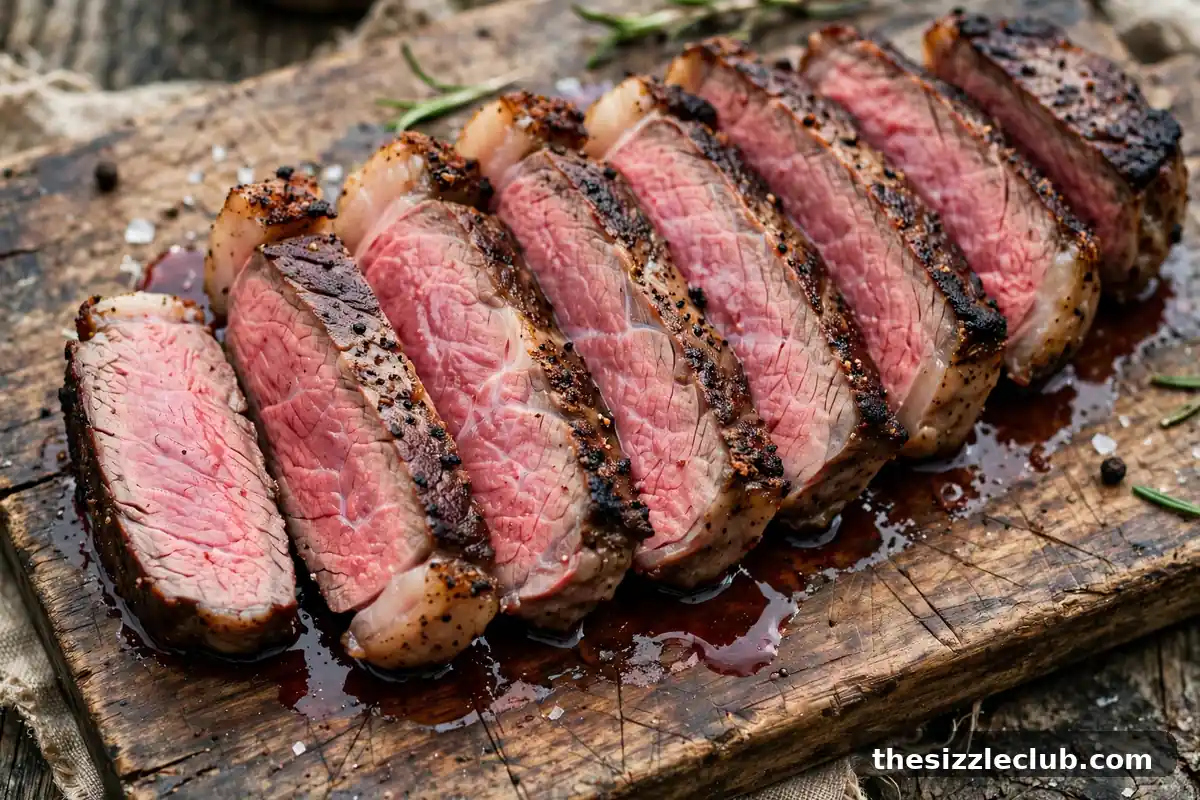
Look at the cooked steak: you’ll see long lines running in one direction — that’s the grain, the direction of the muscle fibers. Slice perpendicular to those lines, across the grain, in thin strips about 1/4 inch (6 mm) thick. Hold your knife at a slight angle to get wider, thinner slices.
Why it works: flank’s fibers are long. Slice with the grain and every bite contains a full-length fiber you have to chew through. Slice against it and you cut those fibers into short pieces, so the meat feels tender on the first bite. It’s a physical change, not a cooking trick — a perfectly grilled flank steak sliced with the grain will still eat tough.
One practical tip: flank steaks are often wider than your knife is long, so cut the steak in half crosswise first if needed, then slice each half against the grain. And always slice just before serving — pre-sliced steak cools and dries out fast.
Common Mistakes That Make Flank Steak Tough
- Cooking past medium. Flank has almost no fat to protect it. Past 145°F it tightens up and dries out quickly.
- Slicing with the grain. The number one reason a well-cooked flank steak still eats chewy.
- Skipping the rest. Cutting hot steak spills the juices onto the board. Five minutes costs you nothing and saves the meal.
- Marinating too long. More than 24 hours in an acidic marinade turns the surface mushy. Four hours is the sweet spot.
- A cold or dirty grill. Flank needs a ripping-hot, clean, oiled grate for a fast sear. A lukewarm grill gives you grey, steamed meat with no crust.
- Using a dull knife to slice. A dull blade tears the fibers instead of cutting them cleanly, undoing all the work of slicing against the grain.
What to Serve With Grilled Flank Steak
Sliced flank steak is endlessly versatile. The classic move is a big platter with chimichurri — the herby, garlicky sauce was practically invented for this cut. It also shines in tacos and fajitas with charred peppers and onions, over a grain bowl with grilled corn and avocado, or simply alongside grilled asparagus and roasted potatoes.
For a full meal, pair it with something fresh and acidic to cut the richness: a tomato and red onion salad, grilled lime wedges, or a simple slaw. The steak brings the smoke and char; the sides should bring brightness.
Frequently Asked Questions
How long do you grill flank steak?
For a 1-inch-thick flank steak over high heat (450–500°F), grill 4–5 minutes per side for medium-rare, pulling it at 130°F internal temperature. Add or subtract about a minute per side for thicker or thinner steaks.
What temperature should flank steak be cooked to?
Pull flank steak at 130–135°F for medium-rare, which is the recommended doneness for this lean cut. The USDA safe minimum for beef steak is 145°F with a 3-minute rest. Use an instant-read thermometer — the window between juicy and dry is only about 10 degrees.
Do you need to marinate flank steak?
Not strictly, but it helps a lot. A 30-minute to 4-hour marinade adds flavor deep into the grain and a touch of surface tenderness. If you skip the marinade, season generously with salt and pepper at least 40 minutes before grilling so the salt has time to absorb.
How do you keep flank steak from being tough?
Two things: don’t cook it past medium, and slice it thinly against the grain. Those two steps matter more than the marinade, the grill type, or the seasoning. Resting 5–10 minutes before slicing is the third piece of the puzzle.
Can you grill flank steak on a gas grill?
Yes — a gas grill is actually ideal for flank steak because you can hold a steady 450–500°F. Preheat on high for 10–15 minutes with the lid closed, oil the grates, and cook directly over the burners. The result is identical to charcoal, minus the smoky edge (which you can add with a smoker box of wood chips if you like).
Bottom Line
Grilled flank steak rewards a simple formula: a short marinade, a very hot grill, a fast cook to medium-rare, a proper rest, and thin slices against the grain. Master those five steps and this affordable cut will outshine steaks costing twice as much — every single time.