Kettle vs Kamado vs Offset Smoker: Which Fits You
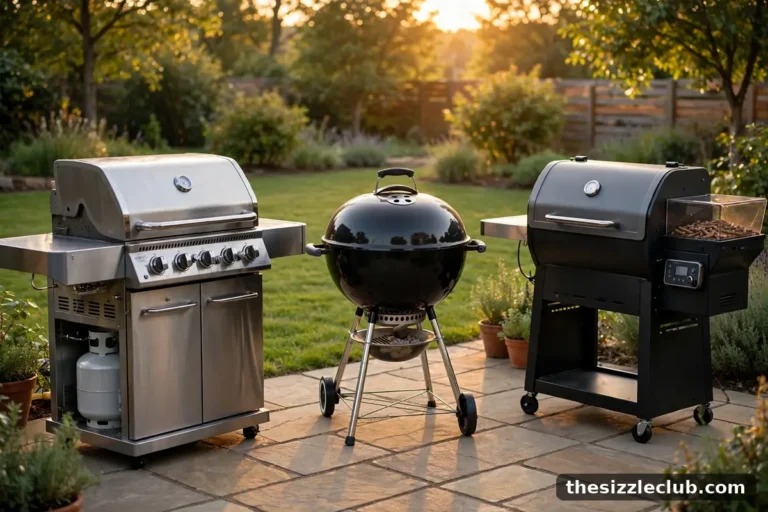
If you cook with charcoal and want to pick the right cooker the first time, here is the short answer: a kettle grill is the most versatile and affordable choice for most backyard cooks, a kamado is the most efficient and precise one for people who want to both sear steaks at very high heat and smoke low-and-slow on the same cooker, and an offset smoker is a dedicated smoking machine for people who regularly cook large batches of barbecue and enjoy tending a fire. All three burn charcoal, all three can make excellent food, and all three demand different amounts of money, space, and attention. The right one is the one that matches how you actually cook, not how you imagine you will cook.
What Each Cooker Does Best
Before comparing details, it helps to understand the personality of each cooker. Each one grew out of a different cooking tradition, and each one rewards a different style of cook.
The kettle grill: the do-it-all workhorse
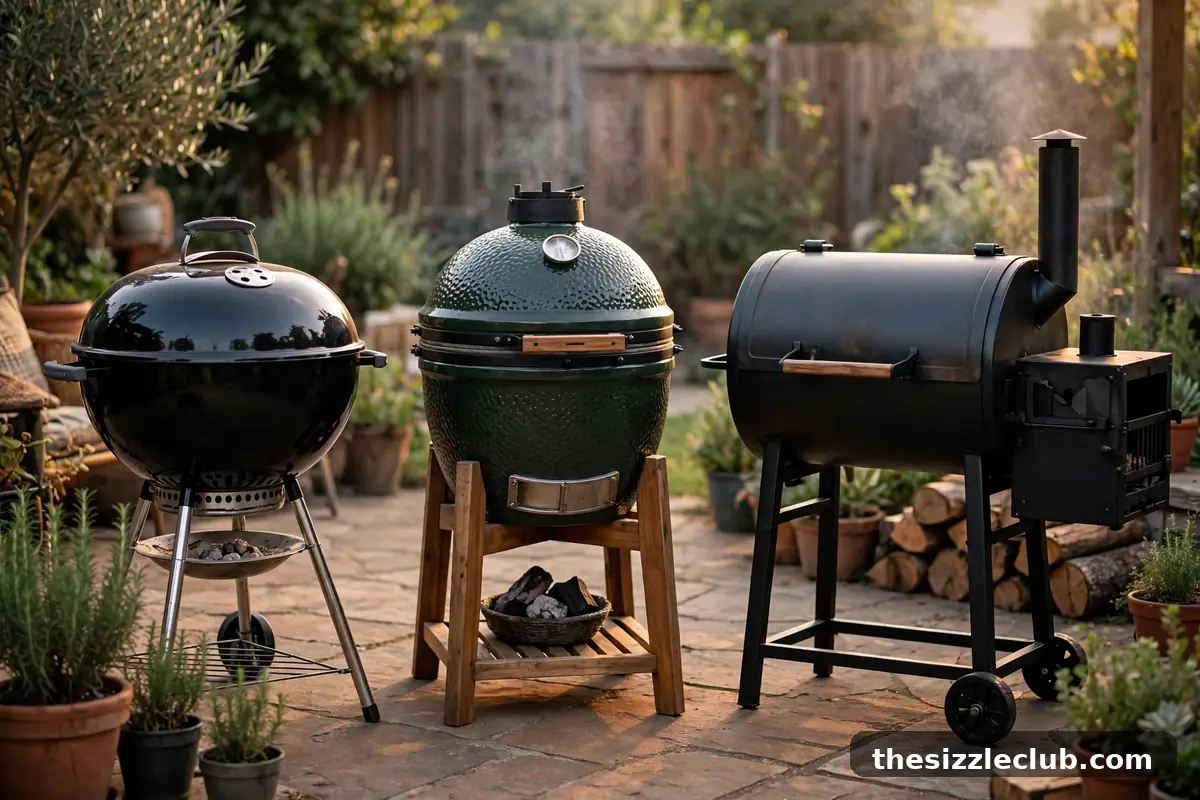
The kettle is the classic round charcoal grill with a lid, and it remains the best-selling charcoal cooker shape for a simple reason: it does almost everything well. With the coals spread across the whole grate it grills burgers, steaks, and vegetables over direct heat. With the coals banked to one side it becomes a capable indirect cooker for whole chickens and even shorter smokes. Add a water pan and arrange the coals in a ring, and it can hold low smoking temperatures for hours. It heats up reasonably fast, it is light enough to move around the patio, replacement parts are easy to find, and it asks very little of you in return. Its weakness is capacity and long-cook efficiency: a kettle loses heat faster than a kamado, and its round grate fills up quickly when you are cooking for a crowd.
The kamado: the insulated all-rounder
A kamado is an egg-shaped cooker made of thick ceramic. That ceramic insulation is the whole story: it holds heat with very little fuel, keeps temperatures remarkably steady for hours, and can run anywhere from a low smoking temperature to the searing heat needed for pizza and steakhouse-style crusts. Many owners describe it as the closest thing to a set-it-and-forget-it charcoal cooker. The trade-offs are weight (it is extremely heavy and essentially lives wherever you first put it), price (it costs several times what a kettle costs), and grate space (most kamados have less cooking area than a comparable kettle). The ceramic can also crack if it suffers a hard knock or a thermal shock, so it rewards careful handling.
The offset smoker: the dedicated barbecue machine
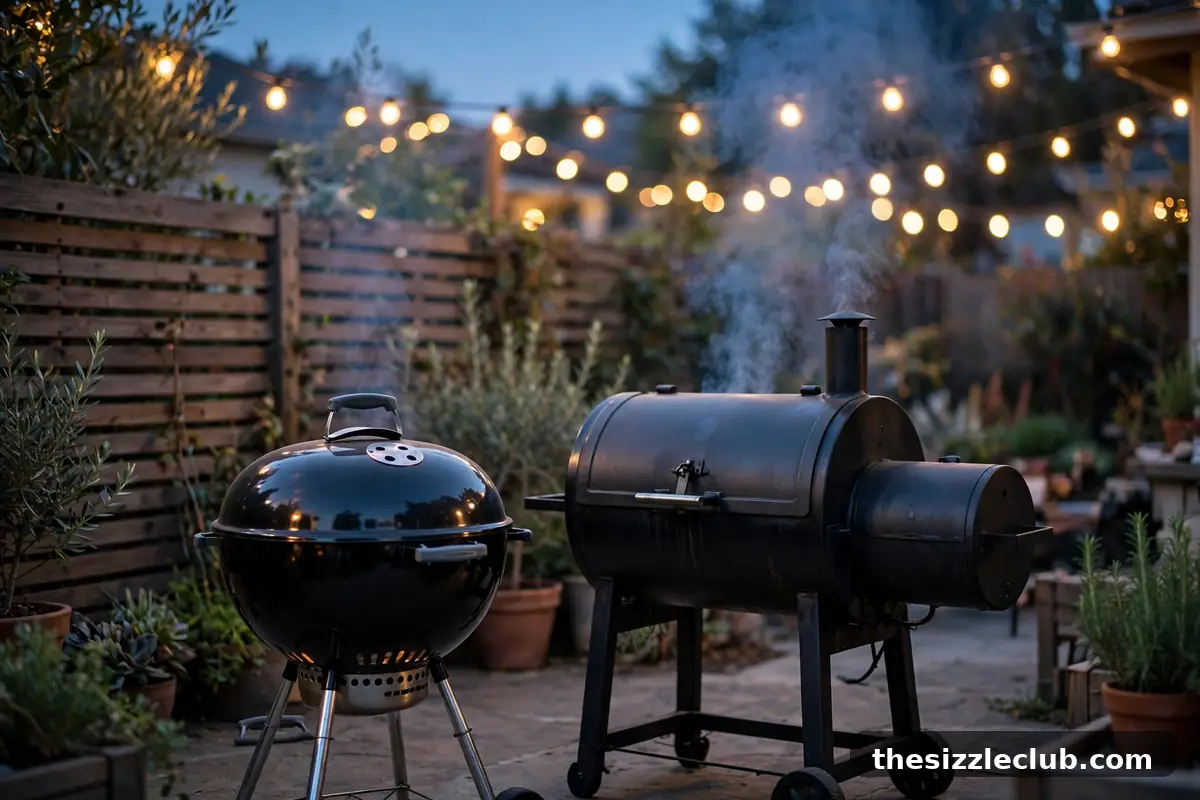
An offset smoker has a firebox attached to the side of a long cooking chamber. You build a fire in the firebox, and heat and smoke flow across the food and out the chimney. This is the traditional tool of Central Texas-style barbecue, and it produces a distinctive smoke flavor that many enthusiasts consider the gold standard. But it is a specialist: it is poor at direct grilling, it needs a lot of patio space, it burns through the most fuel, and it asks for the most attention — you will be feeding the fire and watching temperatures for the entire cook. Buying an offset is a commitment to the craft of fire management, not just a purchase.
Price and Space: The Practical Constraints
Start with the two constraints that eliminate options fastest: your budget and your patio. A kettle is the entry point by a wide margin — it is the cooker most people can buy without thinking twice, and even a large one takes up only a modest circle of patio. A kamado sits in the middle-to-upper range, and because it is so heavy, you should also budget for a sturdy stand or table and plan its permanent home before it arrives. An offset smoker is typically the biggest investment of the three, and it is physically the largest: a full-size offset needs several feet of clearance on all sides plus room to work the firebox comfortably.
Space matters for safety as well as convenience. Every charcoal cooker needs clearance from walls, railings, and anything overhead, and an offset with an active firebox needs more of it. If you grill on a small balcony or a tight patio, the decision may make itself: the kettle fits, the kamado might, and the offset almost certainly does not. Measure your space, subtract the safety clearance, and see what is left before falling in love with a cooker.
Fuel and Heat Control Differences That Matter Daily
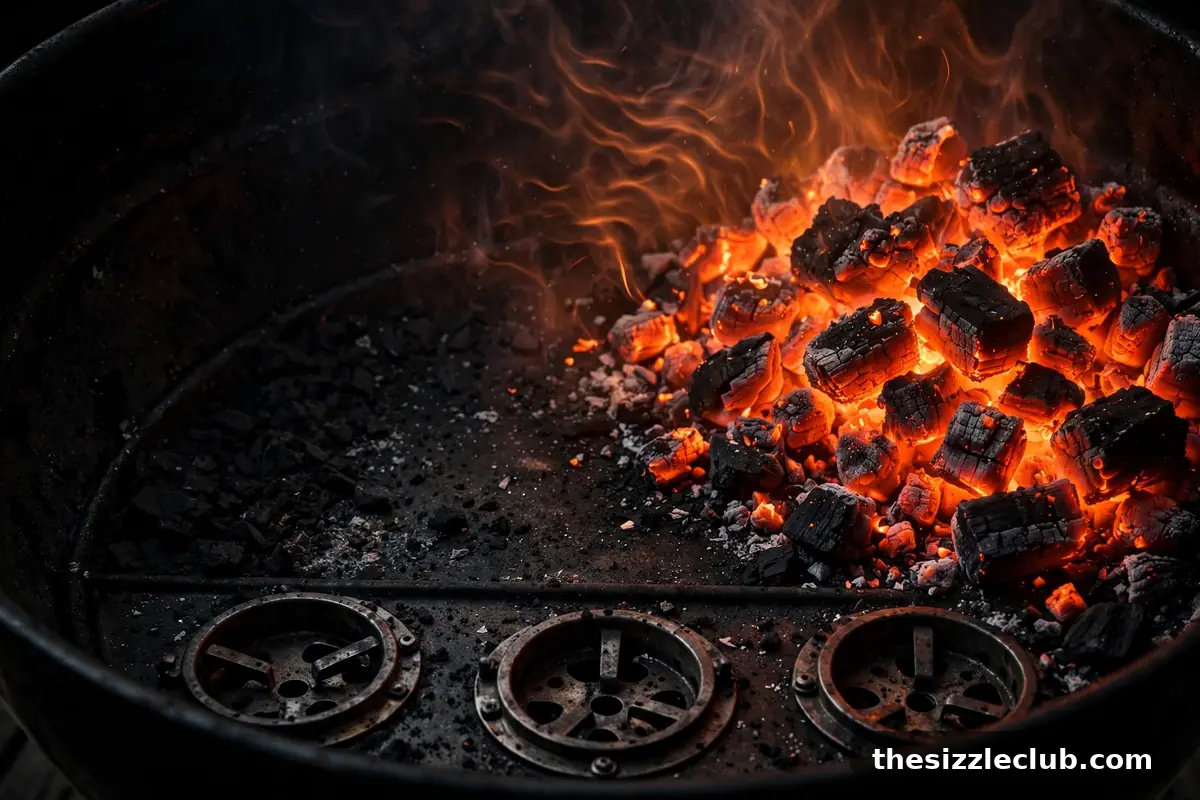
All three burn charcoal, but they burn it very differently, and that difference shapes your daily experience more than any feature list.
The kettle is the most hands-on with heat control. Its thin steel walls respond quickly to vent adjustments, which is great for learning but means temperatures wander more during long cooks. Expect to check and tweak vents periodically, and expect to add fuel on longer smokes. It is forgiving to learn on precisely because it responds so visibly to what you do.
The kamado is the efficiency champion. A small amount of charcoal can hold steady temperatures for many hours because the ceramic traps the heat. Vent adjustments take longer to show their effect, so the technique is small changes and patience. Once you learn its rhythm, it is the easiest of the three to run — but overshooting your target temperature is the classic beginner mistake, because bringing a kamado back down takes a long time.
The offset runs on fire management, full stop. You control temperature by the size of the fire, not just the vents, which means you are adding splits of wood or charcoal regularly and reading the cooker constantly. Many offset owners love exactly this — the cook becomes an event, an afternoon spent outside tending the fire. If that sounds like a chore rather than a pleasure, the offset is not for you.
Who Should Buy Which: Three Cook Profiles
Forget the spec sheets for a moment and match the cooker to the cook.
Profile 1: The weeknight griller
You grill two or three times a week, mostly burgers, chicken, sausages, and vegetables, and you want dinner on the table without a production. Buy the kettle. It lights fast, it handles everything you actually cook, it is easy to clean, and if your habits change later, you have spent little to learn that. Pair it with a good thermometer and you will eat better than most people with far more expensive setups.
Profile 2: The weekend experimenter
You love the craft: reverse-seared steaks, the occasional brisket, maybe homemade pizza, and you enjoy dialing in technique. Buy the kamado. It is the only one of the three that genuinely excels at both screaming-hot searing and low-and-slow smoking, and its stability rewards the time you put into learning it. Just be honest about the weight and the price before you commit — and make sure you have a permanent spot for it.
Profile 3: The dedicated barbecue cook
You dream in brisket and ribs, you regularly cook for crowds, and the idea of spending a whole Saturday tending a fire sounds like a perfect day. Buy the offset. Nothing else gives you that much smoking capacity or that traditional fire-cooked flavor. Go in with open eyes about the fuel use and the attention it demands, and buy the heaviest-built unit your budget allows — thin metal offsets are frustrating to run.
The Two-Grill Argument for Serious Hobbyists
Here is a thought that surprises many buyers: the best setup is often not one perfect cooker but two complementary ones. A kettle paired with a dedicated smoker, or a gas grill paired with a kettle for charcoal flavor, covers more situations than any single cooker. The kettle in particular makes a brilliant second grill — it is affordable enough to keep alongside a kamado or an offset, and it handles the quick weeknight cooks while the big cooker rests.
This matters because every cooker has a weakness, and two modest cookers often cost less than one premium one. Before stretching your budget for a single do-everything cooker, ask whether a kettle plus a used smoker — or a kettle plus the grill you already own — would serve you better. If you are still deciding between fuel types entirely, our honest comparison of gas, charcoal, and pellet grills walks through the bigger picture first.
Mistakes to Avoid When Choosing
- Buying for the cook you imagine, not the cook you are. The offset is romantic until it is your third Saturday of tending a fire. Be honest about your patience.
- Ignoring weight and placement. A kamado does not move easily once assembled. Plan its permanent home, on a level surface, before delivery day.
- Skimping on build quality for an offset. Thin-walled offsets leak heat and smoke and fight you all day. Heavy steel is the whole point.
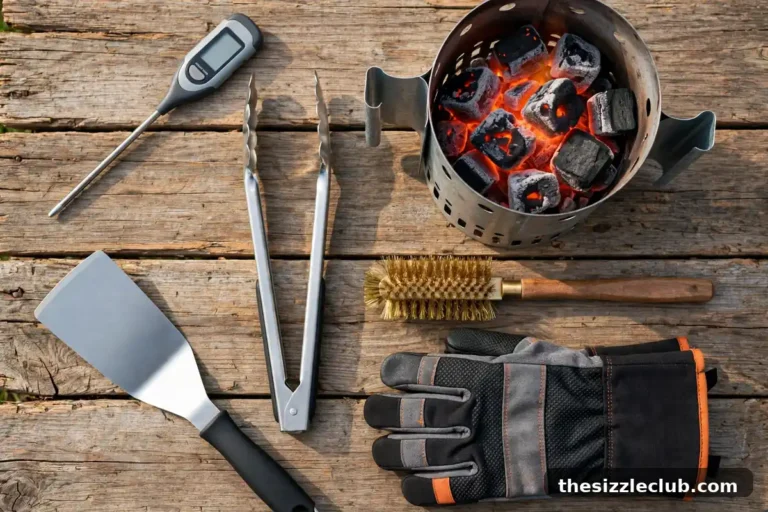
- Forgetting the accessories budget. Whichever cooker you choose, a reliable thermometer, a chimney starter, and long tongs matter more than the cooker itself. See the grilling tools that actually earn their keep before you shop.
- Overlooking airflow learning curve. Every charcoal cooker has its own vent personality. Give yourself three or four practice cooks before judging it.
Your Decision in Five Questions
Answer these honestly and the choice usually becomes obvious:
- How much patio space do you really have, after subtracting safety clearance on all sides? Small space points to the kettle.
- Do you want to grill, smoke, or both? Mostly grilling favors the kettle; serious smoking volume favors the offset; both on one cooker favors the kamado.
- How much fire-tending sounds fun? Love it: offset. Tolerate it: kettle. Minimize it: kamado.
- What is your real budget including the stand, cover, and tools — not just the cooker?
- How many people do you usually cook for? Regular crowds need the offset’s capacity or a two-grill setup.
Key takeaways
- The kettle is the most versatile, affordable, and forgiving choice for most backyard cooks.
- The kamado is the most fuel-efficient and precise, excelling at both searing and smoking — but it is heavy and costs several times more.
- The offset is a dedicated smoker for large batches and traditional flavor, demanding the most space, fuel, and attention.
- Match the cooker to your real cooking habits, patio space, and patience for fire management — not to aspiration.
- Two complementary cookers often beat one expensive do-everything cooker.
Frequently asked questions
Can a kettle grill really smoke meat well?
Yes, for shorter smokes. With the coals arranged in a ring or banked to one side plus a water pan, a kettle holds low temperatures for several hours — plenty for ribs, chicken, and pork shoulder. It is less efficient than a kamado and less capacious than an offset, but the results can be excellent.
Is a kamado worth the extra money over a kettle?
It is worth it if you will use its strengths: fuel efficiency, rock-steady low temperatures, and very high searing heat on one cooker. If you mostly grill burgers and chicken a few times a week, a kettle plus good tools gives you nearly the same dinners for far less money.
What is the hardest part of running an offset smoker?
Fire management. You control temperature by managing the size of the fire in the firebox, which means feeding it regularly and reading the cooker all day. It is a skill that takes several cooks to develop, and it is the reason offsets reward patient, attentive cooks.
Can I grill directly on an offset smoker?
Most offsets are poor direct grillers — the cooking chamber is designed for indirect heat, and the firebox is too small and awkward for grilling. Some people grill over the firebox, but it is a workaround. If you want one cooker that grills and smokes, look at the kettle or kamado instead.
Your next action: pick the cook profile that describes you, measure your patio space with safety clearance subtracted, and set your all-in budget including tools. Then buy the cooker that fits those three facts — and spend your first month learning its vents before you judge it.