How to Smoke Meat on a Regular Kettle Grill
You do not need a dedicated smoker to make real barbecue. A standard 22-inch kettle grill, set up with the snake (or fuse) method, will hold low smoking temperatures for 8 to 12 hours on a single load of charcoal, which is enough for ribs, pork shoulder, and even a modest brisket. The keys are arranging the fuel so it burns slowly in one direction, controlling temperature with the vents instead of the lid, and feeding the fire clean wood smoke rather than thick white clouds.
The Snake Method for Long Steady Heat
The snake method turns a pile of charcoal into a slow-burning fuse. Instead of lighting all the fuel at once, you arrange unlit briquettes in a long curved row and light one end; the fire creeps along the row for hours, igniting only a few briquettes at a time. This gives you the steady 225 to 275 degree F range that low-and-slow cooking demands, without constantly tending the fire.
Building the Snake
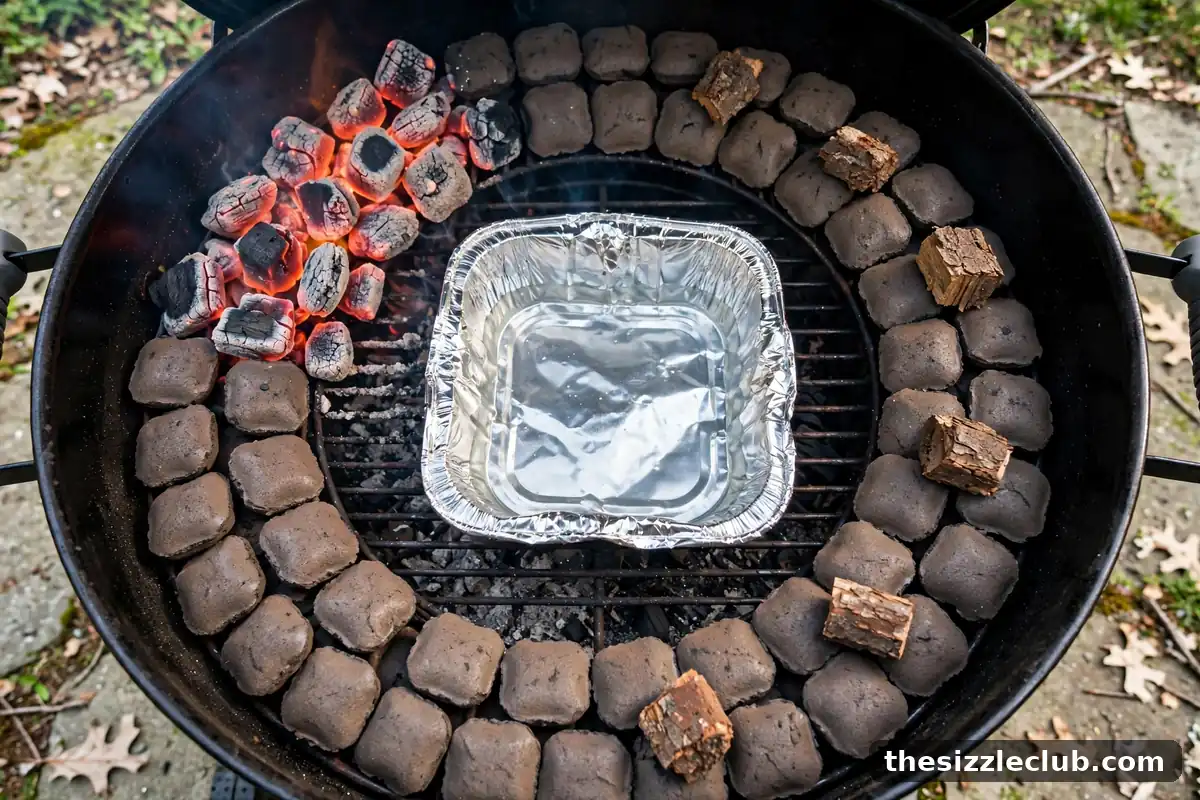
- Arrange briquettes in a half-circle along the outer edge of the charcoal grate, two briquettes wide and two briquettes tall, like a low wall.
- Leave a 4 to 6 inch gap between the two ends of the snake so the fire cannot jump across and light both ends.
- Place wood chunks (not chips) on top of the first third of the snake, spaced a few inches apart, so they smolder as the fire reaches them.
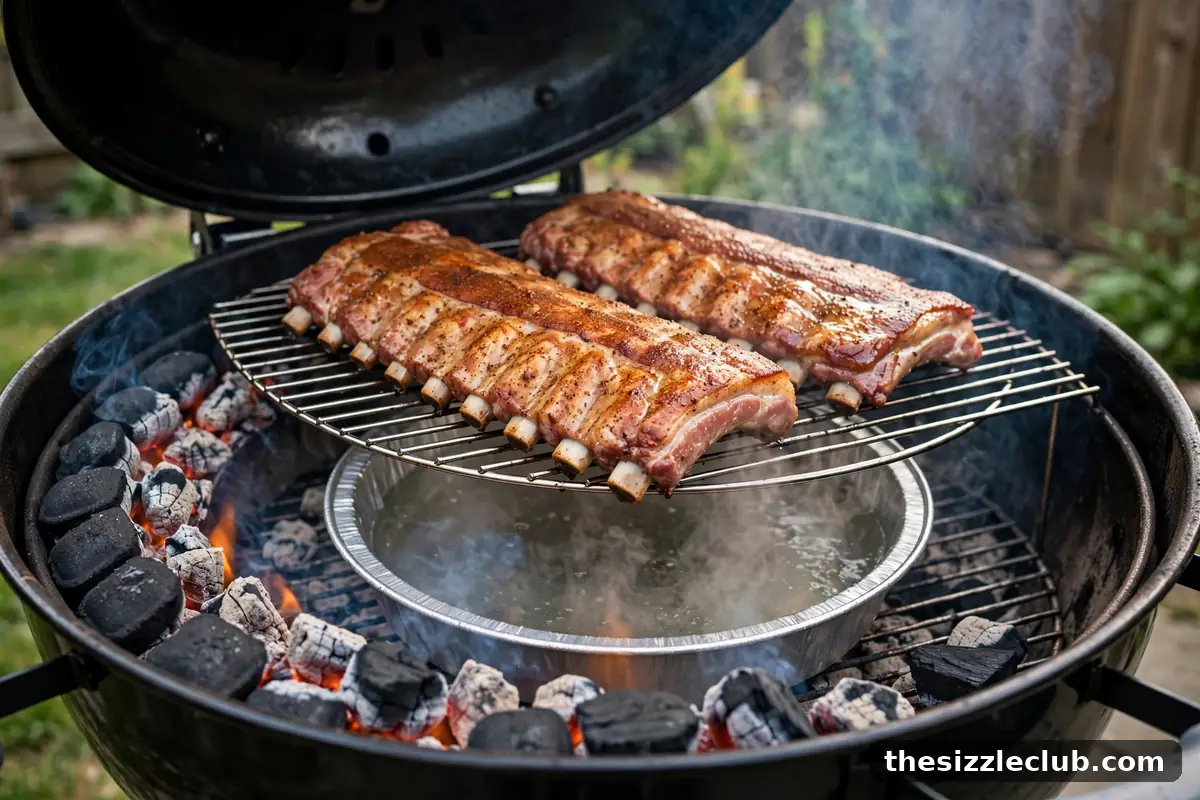
- Set a disposable aluminum pan of hot water in the center of the grate, inside the curve of the snake.
- Light 8 to 10 briquettes in a chimney starter until ashed over, then place them at one end of the snake to start the fuse.
- Assemble the grill with the cooking grate on, place a probe thermometer at grate level, and close the lid with the vents set as described below.
A two-by-two snake typically burns 8 to 10 hours in calm weather. For longer cooks, extend the snake to three-quarters of the circle, or build the snake in two layers of two for extra fuel. If temperatures run cold, as they often do on windy or winter days, a two-by-three stack gives more heat at the cost of a shorter burn.
Water Pan Placement and Why It Matters
The water pan does three jobs at once. First, it acts as a heat sink, absorbing spikes when the fire flares and releasing heat when it dips, which smooths out temperature swings. Second, the evaporating water keeps the cooking environment humid, which slows moisture loss from the meat’s surface. Third, it sits between the fire and the meat as a thermal baffle, shielding the food from direct radiant heat on the fire side.
Place the pan directly on the charcoal grate in the center of the snake’s curve, and position the meat on the cooking grate above the pan, not above the lit coals. Fill the pan with hot water at the start so it does not steal heat while warming up, and check it every few hours on long cooks, refilling with hot water as needed. A dry pan does nothing; a full pan is one of the cheapest temperature-stability tools in barbecue.
Wood Chunk Placement for Clean Smoke
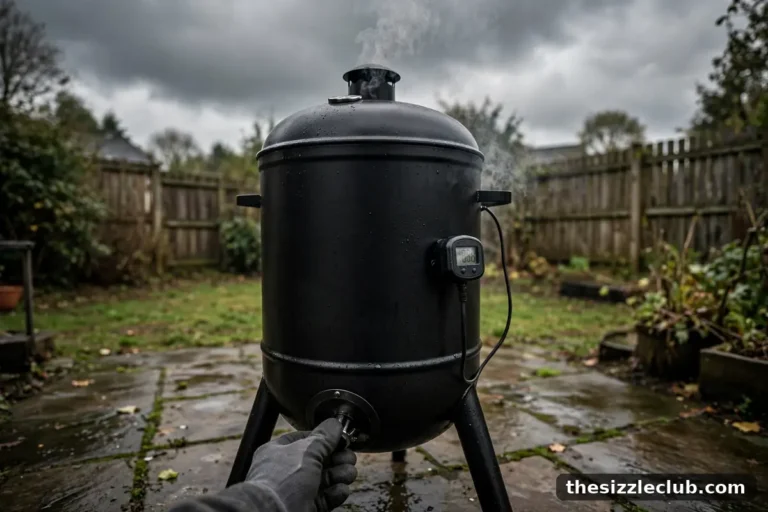
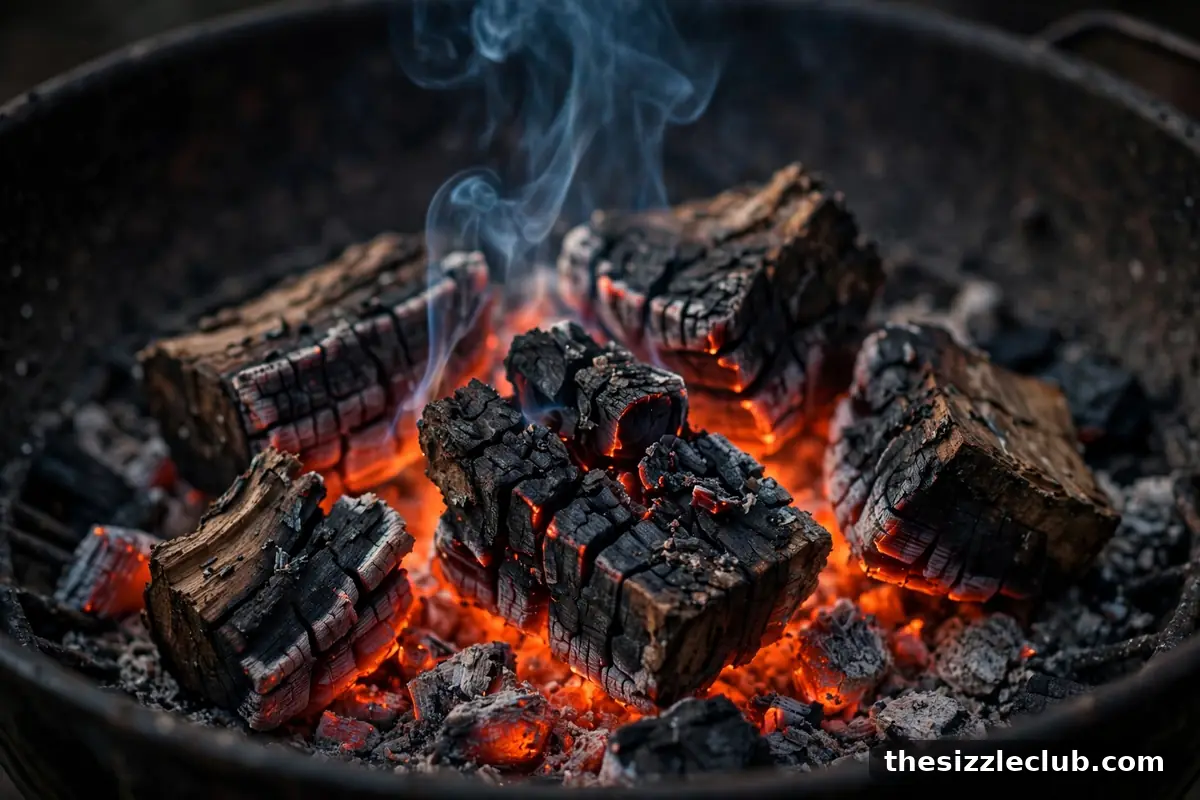
The difference between delicious smoke flavor and bitter, acrid meat is the quality of the smoke, and that comes down to how the wood burns. You want thin, nearly invisible blue smoke, the sign of wood smoldering cleanly with enough oxygen. Thick white billowing smoke means the wood is starved of air or too wet, and it deposits bitter compounds on the food.
Chunks Beat Chips Here
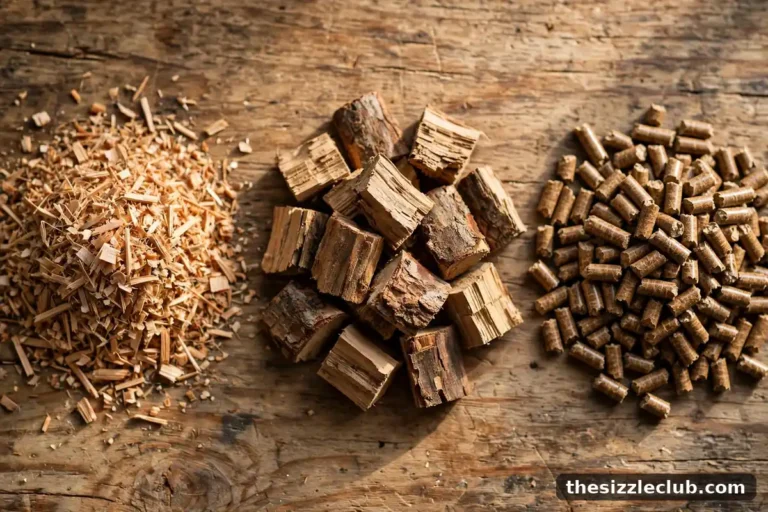
Wood chunks the size of a fist smolder for 30 to 45 minutes each, releasing steady smoke as the snake’s fire reaches them one by one. Chips burn out in minutes and need constant replenishing, which means opening the lid and destabilizing your temperature. Place three to five chunks along the first half of the snake only: meat absorbs most of its smoke flavor in the first few hours, and late smoke mostly adds bitterness.
For a deeper comparison of wood forms and species pairings, see our guide to wood chips vs chunks vs pellets. And do not soak the chunks: wet wood steams before it smolders, producing exactly the thick white smoke you want to avoid.
Vent Control: The Only Dials That Matter
On a kettle, temperature is controlled by oxygen, and oxygen is controlled by the vents. The bottom vents feed the fire; the top vent exhausts smoke and heat. The golden rule: control temperature with the bottom vents and leave the top vent mostly open so smoke never goes stale inside the cooker.
- Start with the bottom vents about one-quarter open and the top vent fully open.
- Let the grill settle for 30 to 45 minutes before adding meat; chasing the temperature in the first 20 minutes leads to overcorrection.
- Adjust in small increments, a quarter-turn at a time, then wait 15 minutes before judging the result.
- If temperature climbs too high, close the bottom vents slightly. Never fully close the top vent to cool the grill; trapped stale smoke ruins flavor.
- Make one adjustment at a time. Changing both vents, the lid position, and the fuel at once teaches you nothing about what worked.
Resist the urge to lift the lid and peek. Every peek costs 10 to 15 minutes of recovery time as heat escapes. Trust your grate-level thermometer and the snake, and check the meat only when the numbers tell you it is time.
What to Smoke First: The Forgiving Starter Cooks
Not every cut is a good first smoke. Start with foods that forgive temperature swings and reward you quickly, then work up to the long, demanding cooks.
- Chicken thighs and drumsticks: 2 to 3 hours, forgiving of temperature swings, and the smoke flavor is unmistakable. Finish over direct heat for crisp skin.
- Pork ribs: 5 to 6 hours on the snake, and the bend test tells you clearly when they are done.
- Sausages: 1 to 2 hours of smoke transforms even store-bought links; nearly impossible to ruin.
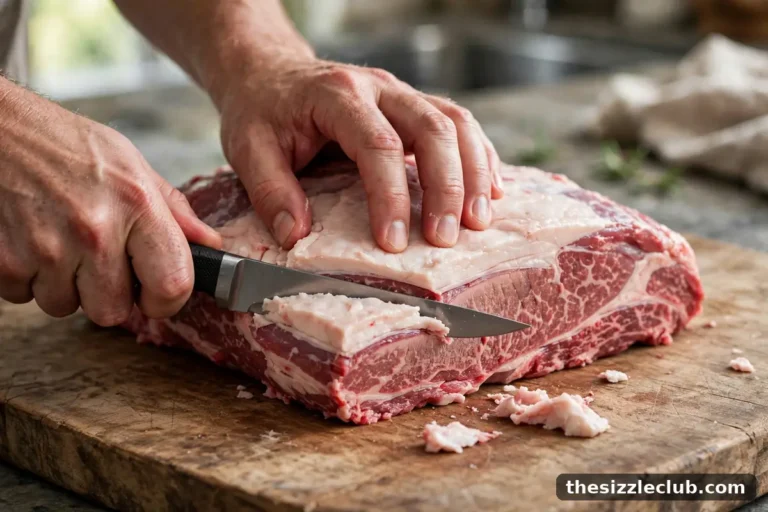
- Pork shoulder: 8 to 10 hours, but extremely forgiving thanks to its fat and collagen; your first overnight-style cook.
- Brisket: save this for cook number five or six. It is less forgiving and punishes every mistake in fire management.
The Kettle Decision Framework
Decide whether the kettle is the right tool for a given smoke by asking three questions. How long is the cook? Anything under 10 hours fits a single snake; longer cooks need a mid-cook refuel, which is manageable but adds work. How much meat? A kettle comfortably smokes one pork shoulder, one brisket flat, or two racks of ribs; feeding a crowd means cooking in batches. How steady is the weather? Wind and cold are the kettle’s enemies; on a gusty day, position the grill with the vents facing away from the wind or choose a shorter cook. If the answers line up, the kettle will produce barbecue that stands next to anything from a dedicated smoker.
Mistakes to Avoid
- Using lighter fluid or match-light charcoal. The chemical taste survives into the meat. Use a chimney starter every time.
- Closing the top vent to control temperature. This traps stale smoke and makes food bitter; control heat with the bottom vents.
- Adding wood throughout the whole cook. Smoke flavor is absorbed early; late wood mostly adds bitterness.
- Soaking wood chunks. Wet wood steams and smolders dirty. Use dry chunks.
- Opening the lid constantly. Each peek sets the cook back 10 to 15 minutes and invites temperature swings.
- Skipping the water pan. It is the cheapest temperature stabilizer and humidity source you have.
- Trusting the lid thermometer. It reads high and far from the food; use a probe at grate level.
Key Takeaways
- The snake method gives a kettle 8 to 12 hours of steady 225 to 275 degree F heat on one load of fuel.
- Control temperature with the bottom vents; keep the top vent open so smoke stays clean.
- Use fist-sized dry wood chunks on the first half of the snake only, and aim for thin blue smoke.
- A water pan stabilizes temperature, adds humidity, and shields meat from direct heat.
- Start with forgiving cooks like thighs, sausages, and ribs before attempting brisket.
Frequently Asked Questions
How long will a snake burn on a kettle grill?
A standard two-by-two briquette snake burns roughly 8 to 10 hours in calm weather, and a longer or taller stack can stretch to 12. Wind, cold, and frequent lid-opening all shorten the burn. Build the snake longer than you think you need; unburned briquettes can be reused next time.
Why does my smoked food taste bitter?
Bitter flavor almost always means dirty smoke: thick white smoke from wet wood, smothered wood, or a choked top vent. Use dry chunks, keep the top vent open, and look for thin blue smoke that is barely visible. If you see billowing white clouds, open the vents and let the fire clean up before the meat goes on.
Do I need to wrap meat on a kettle smoker?
Wrapping is optional and works the same on a kettle as on any smoker: it powers through the stall and keeps bark from over-darkening, at the cost of softening the bark. Try your first pork shoulder unwrapped to learn what the bark should look and feel like, then experiment with wrapping on later cooks.
What if my kettle runs too hot with the snake method?
First, verify with a grate-level probe, since lid thermometers read high. If it is genuinely hot, close the bottom vents in small increments and wait 15 minutes between adjustments. Also check that the snake ends are not touching; a fire that jumps the gap lights both ends and doubles your heat. If problems persist, see our guide to why your smoker is losing temperature for the full diagnostic sequence.
Next action: This weekend, build a practice snake and run the kettle empty for four hours with a grate-level probe, adjusting only the bottom vents. You will learn your grill’s personality with zero food at stake, and your first real smoke will feel like a second cook instead of a first.