Grill Safety Checklist: 15 Rules Before You Light Up
Grilling is safe when you respect a few non-negotiable rules — and every serious grill accident traces back to one of them being skipped. Here is the direct answer: place the grill well clear of anything flammable, check gas connections for leaks every season, never use lighter fluid on a lit fire, keep kids and pets out of a marked hot zone, and know exactly what to do if grease ignites before you ever need to do it. The fifteen rules below cover placement, gas, charcoal, the cook itself, and shutdown. Run through them once and they become habit; skip them and you are gambling.
Before You Light: Placement and Setup
- Keep the grill clear of the house. Position grills well away from siding, deck railings, eaves, and anything overhead like awnings or low branches. Heat and stray sparks do not negotiate — distance is the protection.
- Put the grill on a stable, level surface. A wobbling grill is a tipping grill. On decks, use a grill mat underneath to catch sparks and grease; on grass, make sure the legs sit firmly and the area around it is clear.
- Check the weather. High wind turns a manageable flare-up into a dangerous one and blows heat where you do not want it. On very windy days, reposition the grill as a windbreak allows — or postpone the cook.
- Clear the surrounding area. Move cushions, decorations, paper, and anything flammable well away from the grill before lighting. The time to discover a meltable decoration is not mid-cook.
Gas Grills: Leak Checks and Tank Habits
- Do the soapy-water leak test every season. Mix dish soap with water, brush it onto the hose, connections, and tank valve with the gas on but the burners off, and watch for bubbles — bubbles mean gas is escaping. If you find a leak, turn everything off and replace the faulty part before cooking. This two-minute test is the single most important gas-grill habit.
- Inspect hoses and regulators regularly. Look for cracking, brittleness, chew marks, or kinks in the hose, and check that the regulator seats firmly on the tank. Hoses degrade with age and sun exposure — replace them at the first sign of wear, not after they fail.
- Open the lid before lighting a gas grill. If burners do not ignite immediately, gas accumulates under a closed lid, and the eventual ignition can be violent. Lid open, then light; if it does not catch within a few seconds, turn everything off, wait several minutes for gas to dissipate, and try again.
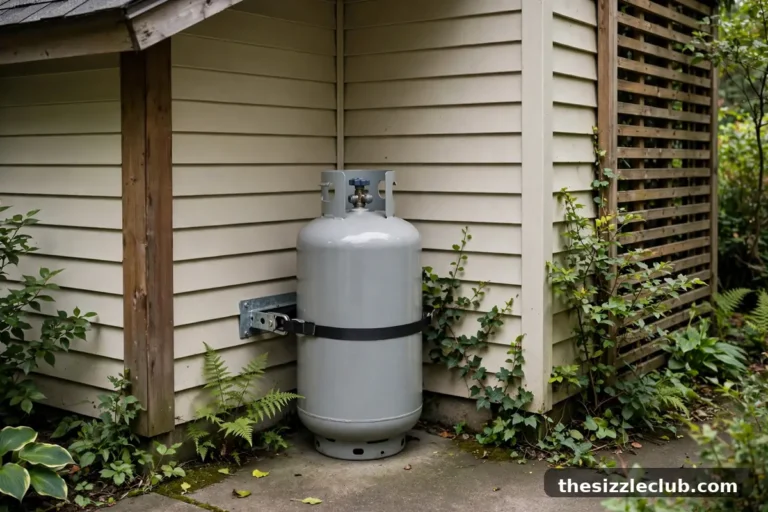
- Store propane correctly. Tanks stay upright, outdoors, away from heat sources and out of direct sun — never in a garage, shed, or car trunk for storage. Full storage guidance is in our guide to storing propane tanks and charcoal safely.

Charcoal Grills: Safe Starts
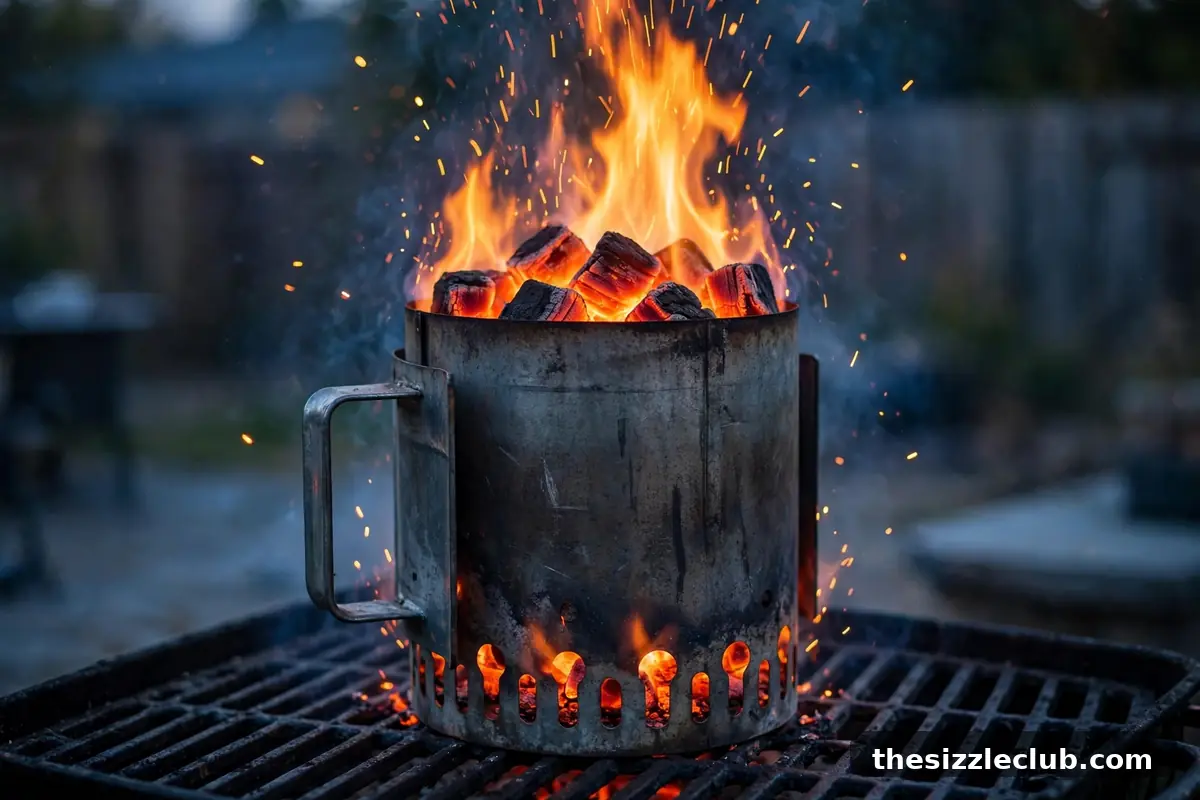
- Use a chimney starter, not lighter fluid. Lighter fluid works, but it is the cause of a disproportionate share of charcoal accidents — flare-ups, singed hair, and fires that jump. A chimney starter with newspaper or starter cubes is safer, more reliable, and keeps petroleum taste off your food.
- Never add lighter fluid to a lit fire. This is the rule people get hurt breaking. Adding accelerant to burning or hot coals can cause the flame to travel up the stream and flash back at you. If the fire needs help, it needed a chimney starter from the beginning.
- Let coals ash over fully before cooking. Beyond flavor, this is a safety step: fully lit, stable coals behave predictably. Half-lit piles shift, collapse, and flare without warning.
- Dispose of ash only when completely cold. Coals can stay hot enough to ignite for much longer than people expect. Scoop ash into a metal container with a tight lid, store it away from anything flammable, and wait at least a full day — longer is safer — before putting it in the trash.
During the Cook: The Hot Zone
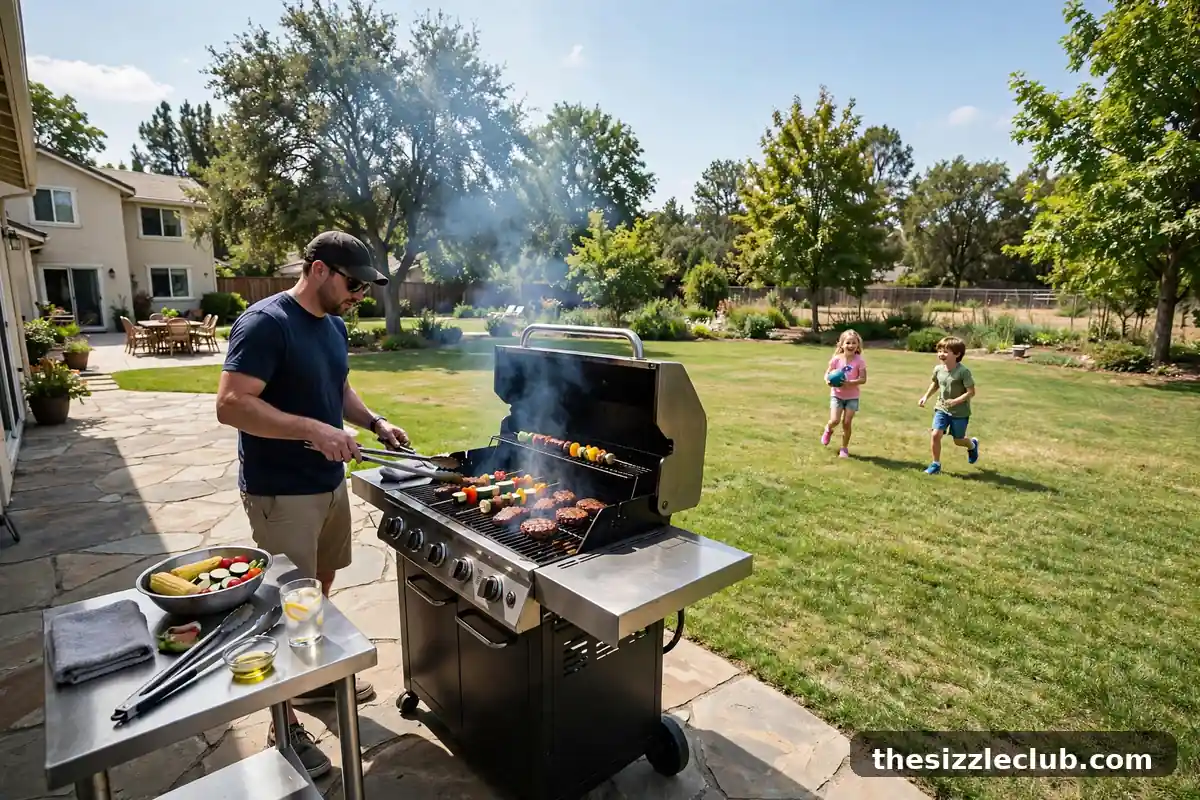
- Establish a kid-and-pet-free hot zone. Mark an invisible boundary — at least several feet in every direction — and enforce it every single cook. Grills are at exactly the height of a small child’s face and hands, and a wagging dog tail can topple tools or the grill itself. Never leave a lit grill unattended, even “just for a minute.”
- Dress and equip for the fire. Wear short or tight-rolled sleeves, use long-handled tools, and keep heat-resistant gloves within reach. Loose clothing and dangling sleeves near open flame are an avoidable risk.
- Manage flare-ups calmly. When fat drips and flames jump, move the food to the cooler zone and close the lid to starve the flames — do not spray water on a grease fire, which can spread burning grease explosively. Our full guide to controlling grill flare-ups covers the in-the-moment technique in detail.
Fire Readiness and Shutdown
Two rules close out the fifteen, and they are the ones people think about least:
- Keep fire control within arm’s reach. Have a fire extinguisher rated for grease fires near the grilling area and know how to use it before you need it. Baking soda can smother small grease fires; a metal lid or sheet pan smothers a grill fire by cutting off oxygen. Water is for the spray bottle on minor flame licks only — never for a real grease fire.
- Shut down deliberately. On a gas grill, turn off the burners and then close the tank valve; on charcoal, close all vents and the lid to suffocate the coals, and confirm everything is cold before covering or walking away for the night. Most “mystery” grill fires are just coals that were assumed dead.
Mistakes to Avoid
- Grilling in the garage or under a low overhang. Carbon monoxide from charcoal is odorless and lethal in enclosed spaces — grills belong outdoors, always.
- Lighting a gas grill with the lid closed. Accumulated gas plus delayed ignition is how fireballs happen. Lid open first, every time.
- Leaving a lit grill unattended. Fires escalate in seconds. If you must step away, the grill gets shut down or someone responsible takes over.
- Spraying water on a grease fire. Water sinks under burning grease, flashes to steam, and throws burning grease outward. Smother it instead.
- Assuming coals are out. Close the vents, wait, and verify cold to the touch before disposal or covering. Impatience here burns down sheds.
- Storing the propane tank indoors “just for the night.” Leaking propane pools low and ignites explosively. Outdoors, upright, always.
Making the Rules Stick: Family, Guests, and Renters
Rules only work if the people around the grill know them. If you have kids, walk them through the hot zone boundary before the first cook of the season — make it a game the first time (“show me where the safe line is”) and it becomes automatic. Assign one adult as the grill watcher whenever children are outside; shared responsibility usually means nobody watching. With guests, state the two rules that matter most to bystanders: the hot zone boundary and never touching the grill or its tools. Most guests will happily comply once told — they just do not know where the line is until you draw it.
If you rent, check your lease and local rules before grilling — many apartment buildings and municipalities restrict charcoal grills on balconies or near structures, and some restrict gas grills too. A quick check beats a fine or an eviction notice. And if you ever lend your grill or cook at someone else’s place, bring the safety habits with you: placement check, leak check, hot zone, shutdown. The checklist is portable, and the fifteen rules work on any grill, anywhere.
Key takeaways
- Placement first: stable surface, clear of the house and anything overhead, with a wind check before lighting.
- Gas grills need a soapy-water leak test every season, intact hoses, and lid-open lighting.
- Charcoal grills need a chimney starter (never lighter fluid on a lit fire), fully ashed coals, and cold-verified ash disposal.
- Keep kids and pets out of a marked hot zone, never leave a lit grill unattended, and smother grease fires — never spray them.
- Shut down deliberately: gas off at burners then tank, charcoal suffocated with vents closed, everything verified cold.
Frequently asked questions
How far should my grill be from the house?
Well clear — far enough that heat, sparks, and smoke cannot reach siding, eaves, railings, or anything overhead. When in doubt, move it farther out; there is no downside to extra distance and real risk in too little.
What should I do if I smell gas at the grill?
Do not light anything and do not try to find the leak with a flame. Turn off the tank valve if you can do so safely, move away, and let the area ventilate. Check connections with the soapy-water test only after the smell has fully dissipated — and if the smell persists or is strong, treat it as an emergency.
Is it safe to grill on a wooden deck?
Yes, with precautions: a stable, level grill, a fire-resistant grill mat underneath, strict clearance from railings and the house, and a clean grease management system. The mat catches sparks and drips that would otherwise land on wood.
Can I use my charcoal grill in the garage with the door open?
No. Charcoal produces carbon monoxide, which is odorless and can reach dangerous levels even with a door open. Charcoal grills are for open outdoor air only — no garages, no tents, no enclosed patios, ever.
Your next action: before your next cook, walk the checklist physically — check placement, run the soapy-water test if you grill with gas, confirm the extinguisher is in place, and mark the hot zone. Fifteen minutes once makes every cook after it safer.