How to Control Flare-Ups Without Panic
A flare-up is a sudden burst of flame on your grill, and it has exactly one cause: dripping fat hitting the fire. They look dramatic, but most flare-ups are a routine, manageable part of grilling — not an emergency. The calm response is to move the food, not to spray water. Prevention beats reaction every time: trim excess fat, cook with a two-zone fire, and keep the lid handy. Here is the full playbook for preventing flare-ups, handling them in the moment, and recognizing the rare moment when flames mean a real grease fire.
What Causes Flare-Ups: Dripping Fat Meets Open Flame
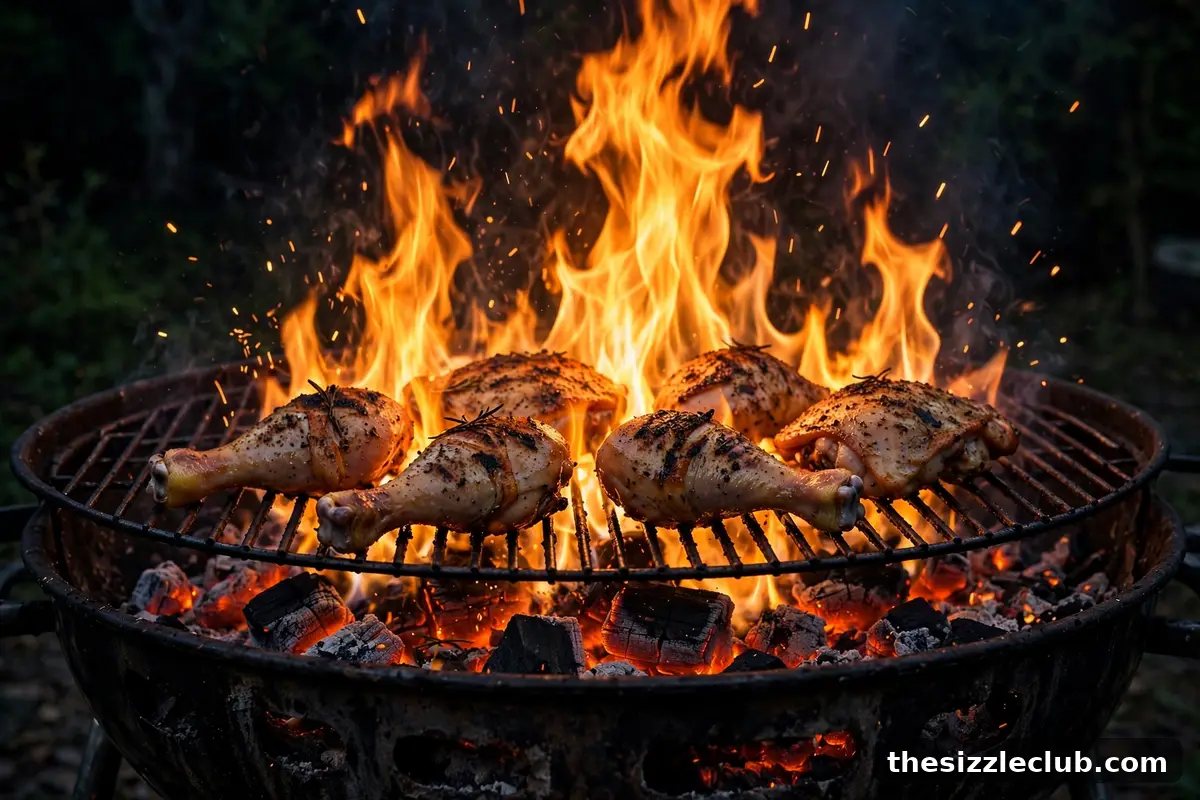
Every flare-up follows the same chain of events. Fat renders out of the meat as it cooks — from chicken skin, burger edges, sausage casings, marbled steaks. The liquid fat drips down through the grates onto the heat source: onto coals, onto burner covers, onto a drip pan that is already full. The fat vaporizes and ignites, and flames leap up through the grates toward your food.
Some foods are flare-up factories. Skin-on chicken, fatty burgers, sausages, bacon-wrapped anything, and well-marbled steaks all release a lot of dripping fat. Lean foods like chicken breasts, shrimp, and vegetables rarely flare at all. Wind makes flare-ups worse by feeding flames extra oxygen, and a dirty grill with months of grease buildup gives every drip extra fuel to ignite. Understanding the chain — fat, drip, ignition — tells you exactly where to break it.
Prevention: Trimming, Two Zones, and Lid Discipline
The best flare-up is the one that never happens. Three habits prevent the vast majority of them.
Trim excess fat before cooking
Leave enough fat for flavor — a quarter inch on steaks and chops is plenty — but trim the thick, floppy exterior fat that contributes drips without improving the eating. Score the remaining fat cap in a crosshatch pattern so it renders evenly instead of curling and dripping in bursts. For chicken, trim loose skin flaps and excess fat deposits around the thighs.
Cook with a two-zone fire
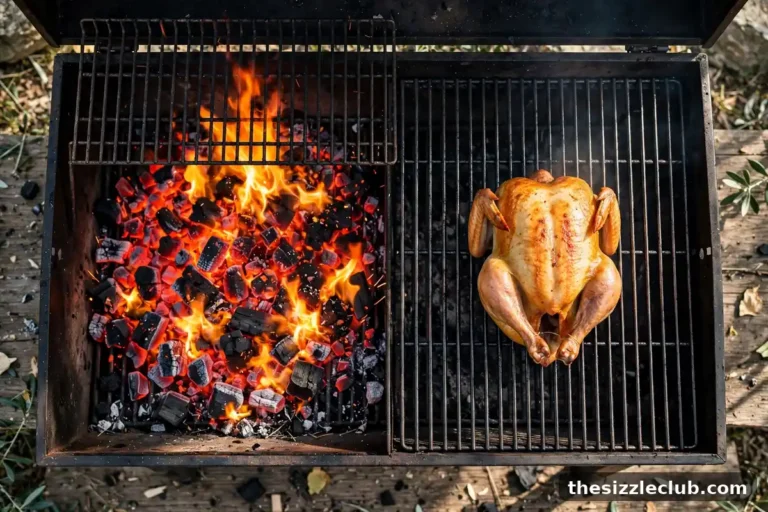
This is the structural fix. With a cool zone available, flare-prone food always has somewhere safe to go, and you can cook fatty items mostly over indirect heat where drips never reach open flame. Sear fatty steaks quickly over the hot zone, then move them indirect to finish — the sear-then-roast pattern from our direct vs indirect heat guide is inherently flare-resistant. Many experienced grillers cook chicken skin and sausages almost entirely over indirect heat for exactly this reason.
Keep the lid closed and handy
A closed lid starves flames of oxygen and smothers small flare-ups on its own — often you will hear a flare-up whoosh and die without ever opening the grill. Lid discipline during indirect cooking doubles as flare-up suppression. Keep the lid where you can close it in two seconds, not leaning against the fence across the patio.
In the Moment: Move, Do Not Spray (Usually)
When flames leap up, do exactly this: pick up the food with long tongs and move it to the cool zone, then close the lid. That is the whole emergency procedure for a normal flare-up. The flames die down within seconds once the fat source is gone and the oxygen is cut off.
What not to do: do not spray water on a charcoal or gas grill flare-up. Water turns to steam instantly, can spread burning grease, and on a gas grill it can damage burners — plus the steam blast can burn you. A spray bottle seems intuitive but usually makes things worse. The one exception is a tiny, controlled spritz on a charcoal grill to calm coals, and even that is optional when moving the food works so well.
Stay calm and stay at the grill until the flames settle. Flare-ups feed on inattention — the cook who walks away to grab a drink returns to a problem. Keep your tongs in hand when cooking fatty foods, and never leave a hot grill unattended. Our grill safety checklist covers the full set of habits that keep routine flare-ups from becoming real problems.

When Flare-Ups Signal a Grease Fire Instead
A normal flare-up is brief, localized, and dies when you move the food and close the lid. A grease fire is different: flames that keep growing, spread across the grill, or persist with the lid closed and the food removed. Grease fires feed on accumulated grease in drip pans, on burner covers, and in the bottom of the grill — months of buildup igniting at once.
If you suspect a grease fire on a gas grill, turn off the burners if you can do so safely, keep the lid closed to starve the oxygen, and step back. Do not use water — it spreads burning grease explosively. A fire extinguisher rated for grease fires, or a large box of baking soda, is the right tool; keep one within reach of the grill, not in the garage. On a charcoal grill, close all the vents to choke the fire and step away. If flames escape the grill or you cannot control them within a minute, call emergency services. This is rare, and it is almost always the result of long-neglected cleaning — which is why the cleaning habits below matter.
Cleaning Habits That Prevent Most Flare-Ups
A clean grill flares less. After every cook, while the grill is still hot, brush the grates thoroughly — this is the single habit that matters most. Empty and clean the grease drip pan regularly; a full drip pan is one of the most common grease-fire fuel sources on gas grills. Every few months, do a deeper clean: remove the grates and burner covers, scrape out accumulated grease from the cook box, and check that the grease management system drains freely. On charcoal grills, empty the ash before it piles up to the coals, since ash buildup restricts airflow and creates hot spots. These habits take minutes and eliminate the fuel that turns ordinary drips into dramatic fires.
On gas grills, also inspect the burner covers and heat tents during your deep clean — warped or rusted tents let fat drip straight onto burners, increasing flare-ups. Replacing worn heat tents is inexpensive and restores the flame-taming behavior the grill was designed with. On charcoal grills, a kettle with an ash sweeper makes the pre-cook ash dump a ten-second job, so there is no excuse to skip it.
Mistakes to Avoid
- Spraying water on flare-ups. It spreads grease, creates steam burns, and rarely helps. Move the food and close the lid instead.
- Cooking fatty food over full-blast heat with no cool zone. A single-zone inferno plus dripping fat is a flare-up guarantee.
- Walking away from a hot grill. Flare-ups are manageable when you are watching and dangerous when you are not.
- Letting grease build up for months. Drip pans and cook boxes full of old grease are grease-fire fuel.
- Panicking and making it worse. Flailing, blowing on flames, or throwing water around escalates a routine flare-up. Move, close, wait.
Decision Criteria: Flare-Up or Grease Fire
Run this assessment in seconds. Did the flames start when fat dripped and do they shrink when you move the food and close the lid? Normal flare-up — carry on. Do the flames persist or grow with the lid closed and food removed? Suspected grease fire — shut off gas if safe, keep the lid closed, get the extinguisher. Are flames escaping the grill body or spreading to surroundings? Emergency — step back and call for help. Are you unsure? Treat it as the more serious option. Hesitation costs nothing when the answer is just a flare-up, and caution saves everything when it is not.
Key Takeaways
- Flare-ups are caused by dripping fat hitting the fire — break the chain with trimming, two zones, and a closed lid.
- In the moment: move the food to the cool zone and close the lid. Do not spray water.
- Fatty foods (chicken skin, sausages, marbled steaks) flare most; cook them largely over indirect heat.
- Persistent, spreading flames with the lid closed signal a grease fire — shut off fuel, keep the lid shut, use an extinguisher, never water.
- Regular cleaning — hot brush after every cook, emptied drip pans — prevents most flare-ups and nearly all grease fires.
Frequently Asked Questions
Are flare-ups bad for the food?
Brief flare-ups mostly just add char; the food is usually fine once moved. But repeated or prolonged flare-ups deposit soot and bitter, acrid flavors, and they can char the outside before the inside cooks. Minimizing them improves both safety and taste.
Should I keep a spray bottle by the grill?
It is a common recommendation, but moving the food and closing the lid works better and carries no steam-burn risk. If you keep one, use it sparingly on charcoal only, and never as your primary flare-up plan.
Do gas or charcoal grills flare more?
Charcoal flares more visibly because dripping fat lands directly on open coals. Gas grills flare too — fat hits the burner covers and vaporizes — but the flames are often smaller. Neither type is immune, and the same prevention works for both.
Can I prevent flare-ups with a drip pan?
A drip pan under the food on the indirect side catches fat before it reaches the fire, which helps on long cooks. Just remember to empty it — a full drip pan becomes a grease-fire hazard itself.

Your next action: before your next cook with anything fatty, set up two zones, trim the excess fat, and put your tongs where you can grab them without looking. When the first flare-up comes — and with chicken skin or sausages, it will — you will move the food, close the lid, and watch the flames die in seconds. That calm, practiced response is the whole skill, and one cook is enough to make it automatic.