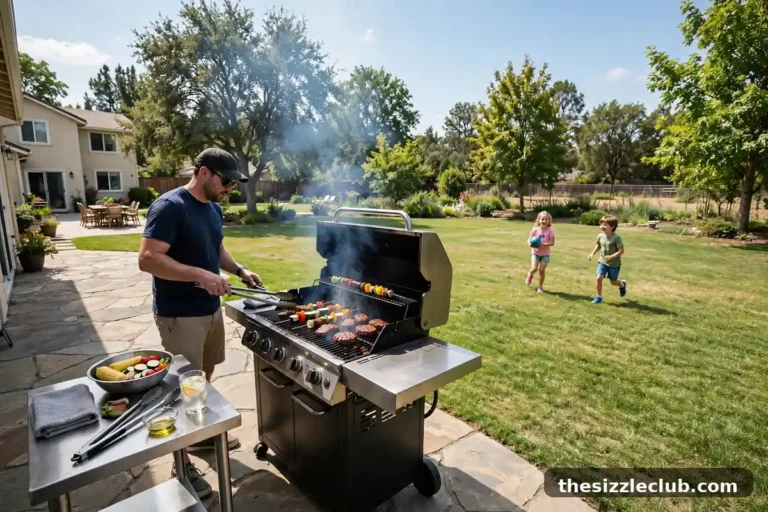
How to Store Propane Tanks and Charcoal Safely
Propane and charcoal are safe fuels when stored correctly — and genuinely dangerous when stored carelessly. The short answer: propane tanks live upright, outdoors, away from heat, always; charcoal lives dry, sealed, and off the ground. Most storage mistakes come from convenience (“just for the night in the garage”) rather than ignorance, so this guide focuses on the practical habits that keep both fuels safe between cooks: how to tell how much propane is left, how to transport tanks without breaking the rules everyone breaks, and what to do with old tanks and ash at the end of their life.
Propane: Upright, Outdoors, Away From Heat — Always
The three rules of propane storage are absolute because propane’s physics are unforgiving. Propane is heavier than air, so a leaking tank indoors fills the low spaces — garages, basements, car trunks — with an invisible, highly flammable gas. That is why the rules have no exceptions:
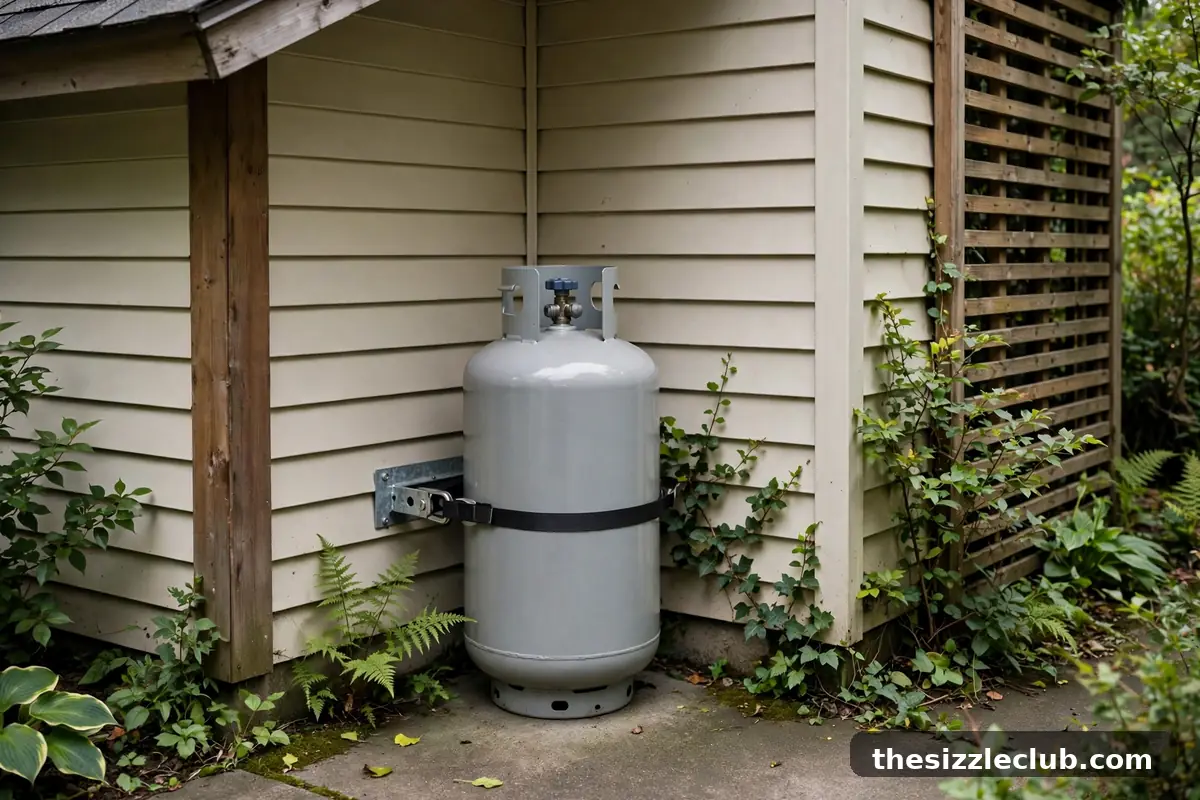
- Upright, always. The tank’s safety relief valve is designed to vent vapor from the top of the tank. Stored on its side, it can vent liquid propane instead, which expands dramatically and creates a far more dangerous release. Transport and storage both happen upright.
- Outdoors, always. Never in a garage, shed, basement, or car trunk — even “temporarily.” A shaded, ventilated spot outside, protected from direct sun, is the correct home.
- Away from heat and ignition sources. Keep tanks clear of the grill’s heat zone when not in use, away from water heaters, and out of sustained direct sunlight, which raises internal pressure.
Secure the tank so it cannot tip or roll — a simple milk crate or a dedicated tank stabilizer works. And keep the valve closed and capped when the tank is not connected; the plastic cap keeps dirt and insects out of the valve.
How to Tell How Much Propane Is Left: Three Methods
Running out mid-cook is the classic propane frustration. Use one of these three methods before important cooks:
- Weigh it. The most accurate method. Every tank has its empty (“tare”) weight stamped on the collar. Weigh the tank on a bathroom scale, subtract the tare weight, and the remainder is propane. A standard grill tank holds about 20 pounds of propane when full, so the math is simple.
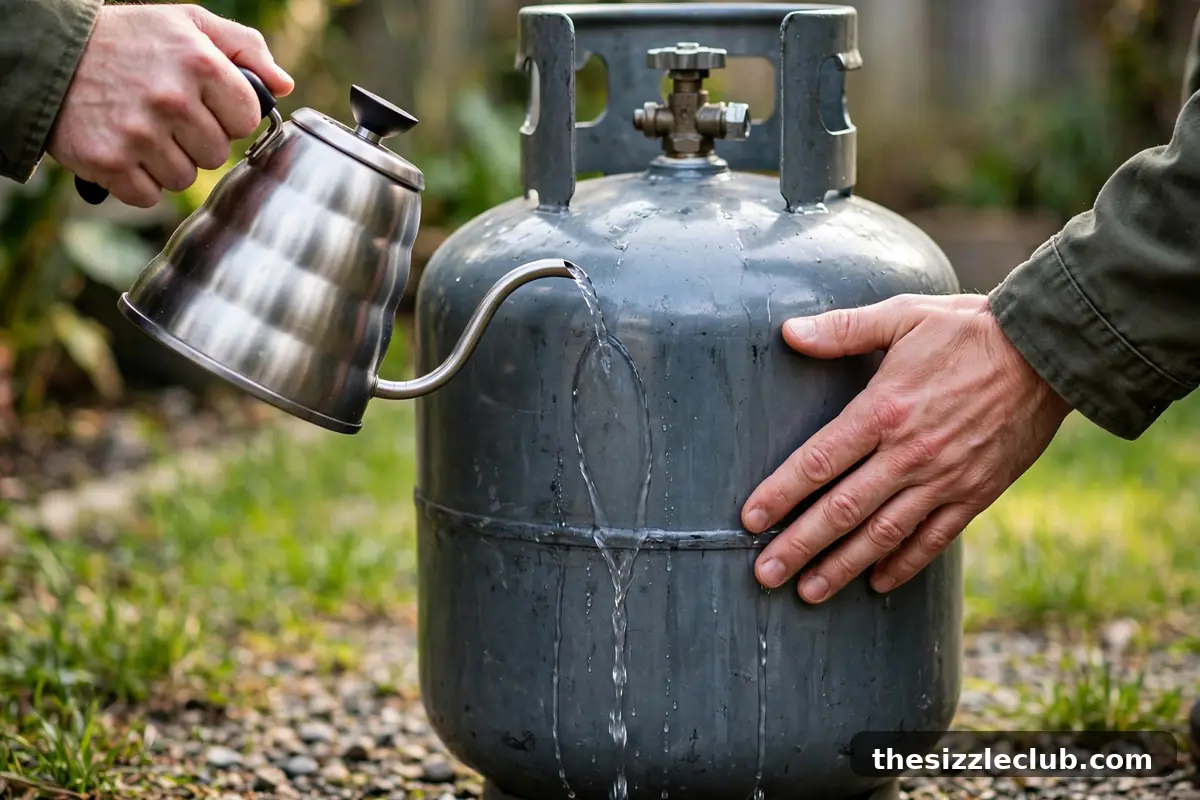
- The hot water trick. Pour hot (not boiling) water down the side of the tank, then feel the metal from top to bottom. The tank will feel warm above the propane level and cool where liquid propane sits inside absorbing the heat. The line between warm and cool is your fuel level. Quick, free, and surprisingly reliable.
- A gauge. Inline pressure gauges and magnetic strip gauges exist, but read them with skepticism: pressure gauges are temperature-sensitive and read “full” until the tank is nearly empty, since propane maintains pressure until the liquid is gone. Weight remains the honest measure; gauges are rough indicators at best.
The practical habit: weigh or hot-water-check the tank the day before a big cook, and keep a spare full tank if you grill often. A spare tank is cheaper than a ruined dinner party.
Charcoal Storage: Dry, Sealed, Off the Ground
Charcoal’s enemy is moisture. Both lump and briquettes absorb humidity from the air, and damp charcoal lights reluctantly, burns inconsistently, and produces acrid smoke. The storage rules are simple:
- Keep bags sealed. Roll the bag top closed and clip it, or transfer charcoal to a lidded plastic bin or metal container. An open bag in a humid garage is a slow sponge.
- Off the ground. Concrete floors wick moisture. Store bags and bins on a shelf, pallet, or rack — anything that breaks contact with the floor.
- Indoors or under real cover. A garage or shed is fine for charcoal (unlike propane) as long as it stays dry. If it must live outside, use a truly waterproof container, not just the paper bag under a grill cover.
- Separate from the propane. Store charcoal away from tanks and away from anything that could ignite it. Bags of charcoal near a water heater or furnace are a bad idea.
If charcoal does get damp, it is not ruined — spread it in the sun for a day or use it in a chimney starter where the concentrated heat drives moisture off. But prevention beats recovery every time.
Transporting Tanks: The Rules Most People Break
Tank transport is where otherwise careful people get casual, usually on the drive home from the refill station. The rules:
- Upright and secured. The tank rides upright, wedged or strapped so it cannot tip or roll. A milk crate in the trunk or truck bed works perfectly.
- Ventilated, and never in a sealed trunk for long. Transport in a ventilated vehicle space, drive directly, and unload promptly. Never leave a tank in a hot parked car — heat raises pressure, and a sealed hot car is the worst combination.
- Valve closed and capped. Obvious, but double-check before loading.
- Straight home. The tank exchange or refill run is not an errand run. Get the tank home and into its outdoor spot promptly.
The same upright-and-secured logic applies to taking a tank to a tailgate or campsite. If it cannot ride upright safely, it should not make the trip.
Disposal: What to Do With Old Tanks and Ash
Old propane tanks do not go in household trash. Tanks have a limited certified lifespan (the manufacture or recertification date is stamped on the collar), and expired tanks cannot be legally refilled. Take unwanted or expired tanks to a propane dealer, a hazardous-waste collection event, or a tank exchange program — many retailers accept old tanks when you buy a new one. Never puncture, cut, or attempt to dismantle a tank yourself, even one you believe is empty.
Charcoal ash needs respect too. Ash can harbor live embers far longer than intuition suggests. Always store ash in a metal container with a tight-fitting lid, kept away from anything flammable, and wait at least a couple of days before bagging it for the trash. Once fully cold, plain wood-charcoal ash is generally safe for household trash — but ash from briquettes with additives or from cooks with heavy grease drippings is better kept out of gardens and compost.
For the broader safety picture these habits fit into, review our grill safety checklist — and if you are weighing fuel types for your next grill, our gas vs charcoal vs pellet comparison covers the trade-offs.

Mistakes to Avoid
- Storing a propane tank in the garage “just overnight.” There is no safe indoor overnight. Outdoors, upright, every time.
- Laying a tank on its side to fit the car. The relief valve cannot do its job sideways. Upright or not at all.
- Trusting a pressure gauge as a fuel gauge. Propane pressure stays high until the liquid is nearly gone — then drops off a cliff. Weigh the tank instead.
- Leaving charcoal bags open in humid air. Damp charcoal is the root cause of half of all “my grill won’t light” complaints.
- Trashing warm ash. Embers hide in ash for days. Metal can, tight lid, full cooling — no shortcuts.
- Keeping the spare tank next to the grill. Spares live in their own shaded outdoor spot, away from heat, not tucked beside a hot cooker.
Seasonal Storage Checklist
If you put the grill away for winter, fuel storage deserves the same attention as the grill itself. Run this checklist once: confirm the propane tank valve is closed and capped, and move the tank to its outdoor storage spot — it does not come inside for winter. Check the tank’s certification date stamped on the collar while you are at it; an expired tank discovered in spring delays your first cook. Seal charcoal bags tightly or transfer leftover charcoal to a lidded bin, get everything off the concrete floor and onto a shelf, and make sure the storage spot stays dry through freeze-thaw cycles. Finally, empty the ash catcher completely — ash left sitting all winter absorbs moisture, corrodes metal, and turns spring cleanup into a much bigger job. In spring, reverse the process: inspect the tank and hose before reconnecting, and test-fire a chimney of the stored charcoal before an important cook to confirm it still lights well.
Key takeaways
- Propane tanks: upright, outdoors, secured, valve closed and capped — no indoor storage, ever.
- Check fuel before big cooks by weighing the tank (most accurate) or the hot-water method; keep a spare if you grill often.
- Charcoal: sealed, dry, off the ground, indoors or under real cover — moisture is the enemy.
- Transport tanks upright, secured, and ventilated; drive straight home and unload promptly.
- Dispose of old tanks through dealers or hazardous-waste programs; cool ash fully in a metal lidded container before trashing.
Frequently asked questions
Can I store my propane tank on a balcony?
A balcony can work if it is open-air, the tank stands upright and secured, it is shaded from direct sun, and building rules allow it. What you must never do is bring the tank inside the apartment or store it in an enclosed storage closet — ventilation is the requirement.
How long does propane last in storage?
Propane itself does not degrade — a sealed tank holds its fuel indefinitely. What expires is the tank’s certification, not the gas. Store it correctly and the propane will be as good in two years as it is today.
Does charcoal go bad?
Charcoal does not expire, but it does absorb moisture, which makes it hard to light and unpleasant to burn. Kept dry and sealed, charcoal lasts for years. If a bag has been open in humidity, try drying it in the sun before giving up on it.
What do I do with a tank that is out of certification date?
Take it to a propane dealer for recertification or exchange it through a retail tank-exchange program. Do not try to get it refilled past its date, and never dispose of it in household trash or attempt to dismantle it.
Your next action: today, check where your tank and charcoal actually live. If the tank is indoors or on its side, move it now; if the charcoal bag is open on a concrete floor, seal it and get it onto a shelf. Two minutes, and your fuel storage is handled.