Resting Meat: How Long and Why It Matters
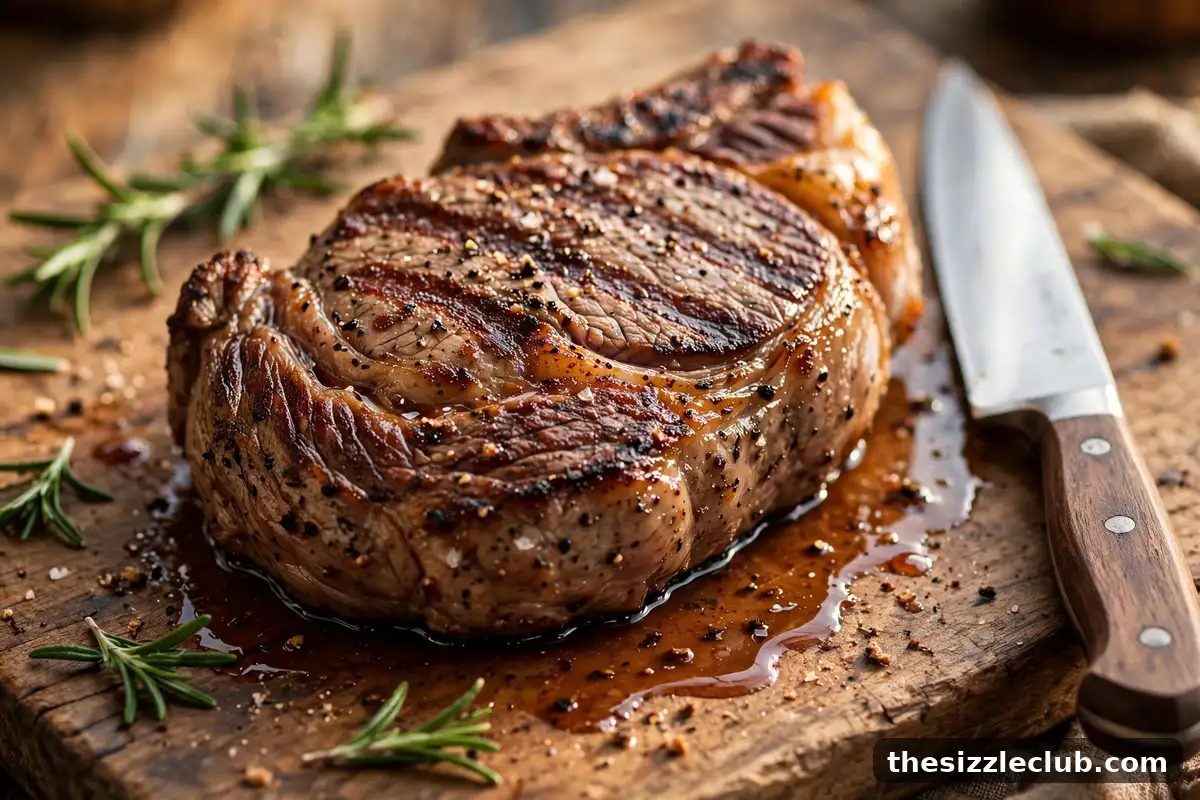
Resting meat means letting it sit after cooking before you cut into it — and it is one of the highest-return habits in grilling. A steak cut straight off the grill floods the cutting board with juice that should be in the meat; the same steak rested for five to ten minutes stays juicy in every bite. Resting does two things: it lets the juices redistribute through the meat instead of pouring out, and it lets carryover cooking finish the job gently. Here is what resting actually does, how long each cut needs, and the slicing technique that finishes the work.
What Resting Actually Does (and the Myths It Does Not)
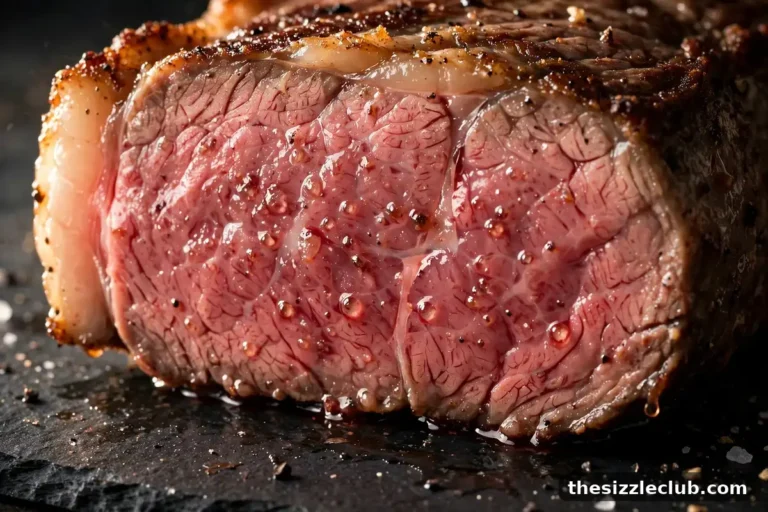
During cooking, heat drives moisture toward the center of the meat — the outer layers overheat and squeeze their juices inward, while the muscle fibers tense and contract. Cut the meat immediately and those pressurized juices escape onto the board. Rest the meat and three things happen: the fibers relax as the temperature equalizes, the juices redistribute outward through the meat instead of pooling in the center, and the surface dries slightly, which actually improves the crust you worked to build.
Now the myths. Resting does not make an overcooked steak juicy again — no amount of resting rescues meat that went twenty degrees past its target. Resting also does not need to be some precise ritual; the window is forgiving, and a few minutes either way changes little. And the old claim that juices need to be reabsorbed like a sponge is an oversimplification — what matters is that the juices stop being under pressure to escape. Think of resting as letting the meat settle, not as a magic trick.
Resting Times by Cut: The Practical Table
Resting time scales with thickness and size, because a bigger piece of meat holds more heat and needs longer for temperatures to equalize. Use these as practical defaults:
- Thin steaks, chops, burgers, and chicken breasts: 3 to 5 minutes. Small pieces equalize fast.
- Thick steaks and pork chops (1.5 inches and up): 5 to 10 minutes. This is the range where resting makes the most visible difference.
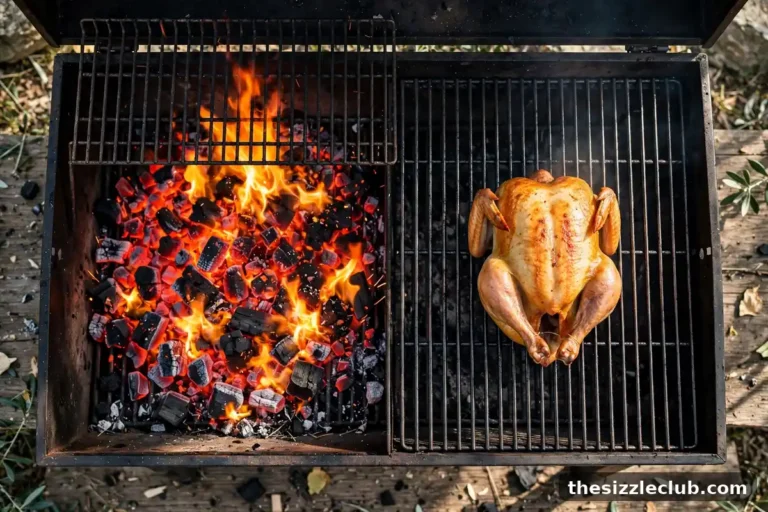
- Whole chickens and small roasts: 15 to 20 minutes. Larger mass needs longer to settle.
- Large roasts, brisket, and pork shoulder: 30 to 60 minutes, sometimes longer. Big cuts can rest an hour and still be piping hot inside.
A useful rule of thumb: rest for about one-third of the cook time for roasts, and a flat five to ten minutes for individual steaks and chops. When in doubt, rest a little longer rather than cutting early — meat stays hot far longer than beginners expect, especially tented. Thicker cuts and methods like the reverse sear benefit most from a disciplined rest, since the even internal temperatures need time to settle.
Tenting with Foil: When It Helps and When It Steams
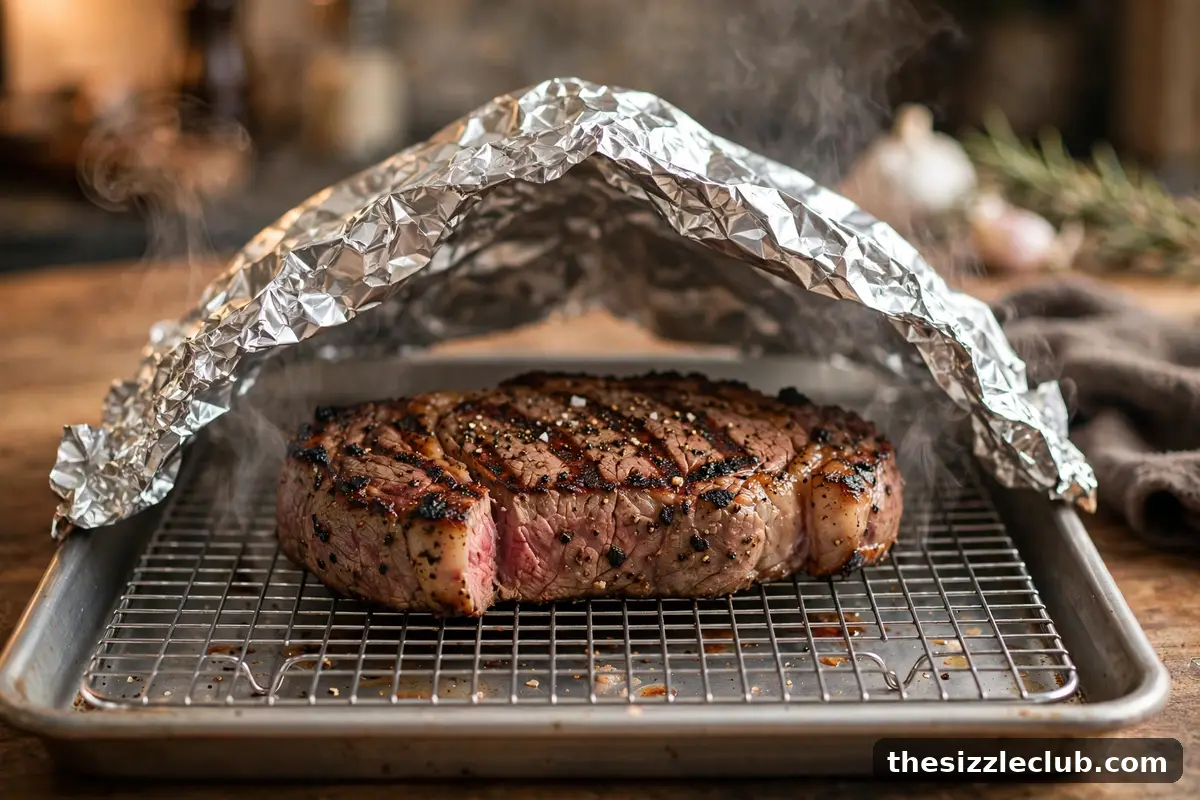
Tenting — loosely covering the meat with foil — keeps it warm during longer rests and shields it from drafts. For roasts and whole birds resting fifteen minutes or more, a loose tent is genuinely useful. The key word is loose: crimp the foil tightly and you trap steam, which softens the crust you spent the whole cook building. A sheet of foil arched over the meat, not touching it, is the right technique.
For steaks and chops resting under ten minutes, tenting is optional. The meat will not cool meaningfully in five minutes at room temperature, and leaving it uncovered preserves the crust better. One more consideration: never wrap meat tightly in foil to rest unless you specifically want to soften the bark — that is a barbecue technique for brisket and pork shoulder, not a general resting method. Tent loosely for warmth, leave uncovered for crust.
Carryover Cooking: Pull Early on Purpose
Meat keeps cooking after it leaves the grill. The outer layers are hotter than the center, and that heat keeps migrating inward during the rest — typically adding five to ten degrees to the internal temperature, more for large roasts. This is carryover cooking, and it means you should pull meat before it hits your target, not at it.
The practical rule: pull steaks and chops three to five degrees below your target doneness, and pull large roasts five to ten degrees below. A steak you want at 130 degrees medium-rare comes off the grill at about 125; the rest carries it home. This is also why thermometers matter so much — carryover is invisible, and only a probe tells you where you actually landed. For the full temperature targets behind these decisions, see our grilling times and temperatures chart. Beginners who pull at the target and then rest end up five to ten degrees over, which is the quiet cause of many disappointing steaks.
Slicing Against the Grain After the Rest
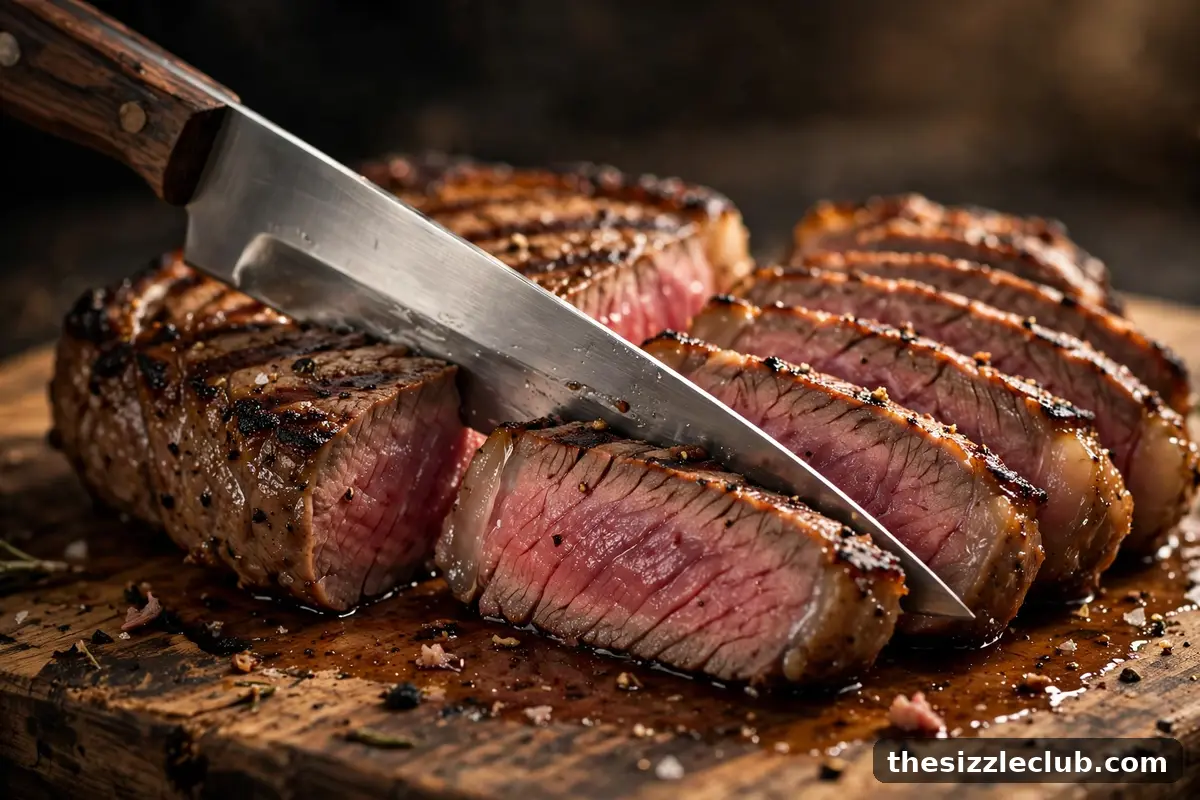
Resting sets up the final step: the slice. Muscle fibers run in parallel lines called the grain, and cutting across those fibers — against the grain — shortens them, which makes each bite more tender. Cutting with the grain leaves long, chewy fibers intact no matter how perfectly you cooked and rested the meat.
Find the grain by looking at the lines running across the meat’s surface, then slice perpendicular to those lines. For steaks like flank and skirt, where the grain is obvious and the cut is everything, slice thin — a quarter inch or less — to maximize tenderness. For thick steaks, the grain often runs in different directions in different sections, so check each section as you go. Use a sharp knife; a dull blade tears fibers instead of cutting them and undoes your careful work. Rest first, then identify the grain, then slice — in that order, every time.
For roasts and brisket, slice only what you are serving and leave the rest whole — every cut exposes new surface area that leaks juice, so unsliced meat stays juicier on the platter. If you are slicing for a crowd, work in batches and keep the unsliced portion tented. And always use a long, smooth stroke with the knife rather than sawing back and forth; sawing tears the fibers and squeezes out juice, undoing the benefits of both the rest and the careful cook.
Mistakes to Avoid
- Cutting immediately to check doneness. Use a thermometer instead. Every early cut bleeds juice you will never get back.
- Pulling at the target temperature. Carryover adds five to ten degrees during the rest. Pull early on purpose.
- Tenting tightly. A tight foil wrap steams the crust soft. Tent loosely or not at all for short rests.
- Resting on a cold surface. A cold plate or board chills the meat from below. Rest on a warm board or a wire rack over a sheet pan.
- Slicing with the grain. Perfect cooking and resting cannot save meat sliced the wrong way. Find the grain and cut across it.
- Skipping the rest on small cuts. Even burgers benefit from three minutes. Small rests cost nothing and save juice.
Decision Criteria: How Long Is Long Enough
Size decides the rest. Individual portions — steaks, chops, breasts, burgers — need five to ten minutes, closer to five for thin and ten for thick. Whole birds and small roasts need fifteen to twenty. Large roasts, briskets, and shoulders need thirty to sixty. Tent loosely when the rest exceeds fifteen minutes or the room is drafty; leave uncovered for short rests where crust matters most. And always factor carryover into your pull temperature — the rest is not just a pause, it is the final, gentle phase of the cook.
Key Takeaways
- Resting lets juices redistribute and fibers relax, so juice stays in the meat instead of flooding the board.
- Rest five to ten minutes for steaks and chops, fifteen to twenty for whole birds, thirty to sixty for large roasts.
- Tent loosely with foil for long rests; leave short rests uncovered to protect the crust.
- Pull meat three to ten degrees below target — carryover cooking finishes the job during the rest.
- Always slice against the grain with a sharp knife after resting.
Frequently Asked Questions
Will the meat get cold while resting?
Not in the timeframes that matter. A steak loses only a few degrees in ten minutes, and large roasts barely cool at all in thirty. Tenting loosely with foil for longer rests keeps things warm. Meat served at a settled, even temperature actually tastes better than meat served scorching on the outside and lukewarm in the center.
Can you rest meat too long?
For food safety, do not leave cooked meat at room temperature for more than two hours total. Within that limit, longer rests are fine for large cuts — brisket and pork shoulder often rest an hour. Small cuts gain nothing past ten to fifteen minutes and just get cooler, so serve them once rested.
Should I rest meat on a cutting board or a rack?
A wire rack over a sheet pan is ideal: air circulates underneath and the crust stays crisp instead of steaming on a flat board. If you use a board, warm it first and choose one with a juice groove to catch any drips.
Does resting apply to chicken too?
Yes. Rest breasts and thighs for five minutes, whole birds for fifteen to twenty. Chicken benefits just as much as beef — the juices need time to settle, and carryover matters for hitting safe temperatures without overshooting into dryness.
Your next action: on your very next cook, set a timer when the meat comes off the grill and do not touch it until the timer ends — five minutes for steaks, ten for thick cuts. Watch how little juice ends up on the board compared to the last time you cut early. That single habit, plus pulling a few degrees early and slicing against the grain, will improve your results more than any new grill or gadget ever could.